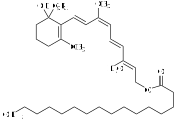
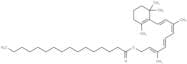
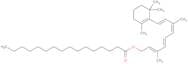
CAS 34356-29-1
:Retinol, 15-hexadecanoate, 9-cis-
- Retinol, palmitate, 9-cis-
- Retinol, 15-hexadecanoate, 9-cis-
- Retinol, hexadecanoate, 9-cis-
- 9-cis-Retinyl palmitate
- 9-cis-Vitamin A palmitate
9-cis-Vitamin A palmitate
CAS:9-cis-Vitamin A palmitate, a 9-cis isomer in corn flakes, has 26% activity of all-trans-vitamin A, the most active form.Formula:C36H60O2Color and Shape:SolidMolecular weight:524.8749-cis-Retinyl Palmitate
CAS:Stability Light Sensitive, Temperature Sensitive
Applications A fatty acid ester of Retinol isomer, found mainly in the retina.
References Bridges, C.D.B., et al.: Methods Enzymol., 81, 463 (1982),Formula:C36H60O2Color and Shape:Colourless To YellowMolecular weight:524.869-cis-Retinyl palmitate
CAS:9-cis-Retinyl palmitate is composed of a fatty acid, retinol (vitamin A), and a palmitate ester. It is used in the treatment of vitamin A deficiency, such as in congenital amaurosis and other cases where retinol cannot be converted to retinaldehyde or retinoic acid. 9-cis-Retinyl palmitate is also used to treat dry eyes in animals and humans. The compound has been shown to have a pharmacological effect on animals, with the ability to reduce chloride secretion in the eye and regulate tear production. 9-cis-Retinyl palmitate is not metabolized by the liver and may therefore be safer than other forms of vitamin A for people with liver disease. The pharmacologic effects of 9-cis-retinyl palmitate are due to its ability to bind with nuclear receptors that regulate gene expression. This binding causes changes in the transcription rate of
Formula:C36H60O2Purity:Min. 95%Molecular weight:524.86 g/molRef: 3D-FR27721
Discontinued product