![Urea,N-[4-bromo-2-(1H-tetrazol-5-yl)phenyl]-N'-[3-(trifluoromethyl)phenyl]-](/_next/image/?url=https%3A%2Fstatic.cymitquimica.com%2Fcas-image%2Fthumb-webp%2F383300-urea-n-4-bromo-2-1h-tetrazol-5-yl-phenyl-n-3-trifluoromethyl-phenyl.webp&w=3840&q=75)
CAS 343630-41-1
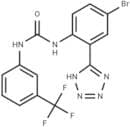
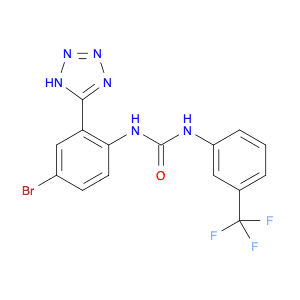
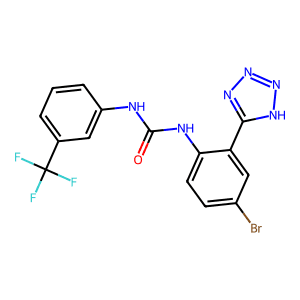
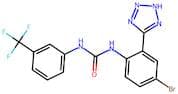
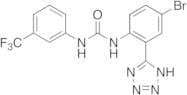
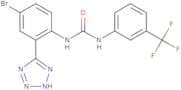
:Urea,N-[4-bromo-2-(1H-tetrazol-5-yl)phenyl]-N'-[3-(trifluoromethyl)phenyl]-
Description:
Urea, N-[4-bromo-2-(1H-tetrazol-5-yl)phenyl]-N'-[3-(trifluoromethyl)phenyl]- is a synthetic organic compound characterized by its urea functional group, which is central to its structure. This compound features a complex arrangement that includes a brominated phenyl ring and a trifluoromethyl-substituted phenyl moiety, contributing to its unique chemical properties. The presence of the tetrazole ring enhances its potential biological activity, making it of interest in pharmaceutical research. The trifluoromethyl group is known for imparting lipophilicity and influencing the compound's interaction with biological targets. This compound is typically solid at room temperature and may exhibit moderate solubility in organic solvents. Its molecular structure suggests potential applications in medicinal chemistry, particularly in the development of new therapeutic agents. As with many halogenated compounds, it is essential to consider its environmental impact and toxicity profile during handling and application. Overall, this compound exemplifies the complexity and diversity of modern synthetic organic chemistry.
Formula:C15H10BrF3N6O
Sort by
Purity (%)
0
100
|
0
|
50
|
90
|
95
|
100
Found 6 products.
NS3623
CAS:NS3623 is an activator of human ether-a-go-go-related gene potassium channels.Formula:C15H10BrF3N6OPurity:97.06%Color and Shape:SolidMolecular weight:427.18NS 3623
CAS:Controlled ProductApplications NS 3623 selectively activates the human ether-a-go-go related gene (hERG) potassium channel which mediates the repolarizing cardiac current IKr. NS 3623 an IKr agonist, cause QT interval prolongation, increasing the risk of dangerous ventricular fibrillations, eventually leading to sudden cardiac death.
References Hansen, R. et al.: J. Cardiovas. Pharmacol., 52, 35 (2008)Formula:C15H10BrF3N6OColor and Shape:NeatMolecular weight:427.179NS3623
CAS:NS3623 is a small molecule that blocks the transport of potassium ions in cells by binding to the ATP-sensitive potassium channel. This leads to an increase in intracellular calcium, which causes cell lysis and apoptosis. NS3623 has shown cytotoxic effects on cancer cells in vitro. It also inhibits the growth of k562 cells and has shown to inhibit angiogenesis, as well as stimulate tumor necrosis factor-α (TNF-α) production.Formula:C15H10BrF3N6OPurity:Min. 95%Molecular weight:427.18 g/mol