CymitQuimica logo

CAS 3449-28-3

:

Dibutyldichlorosilane

Description:
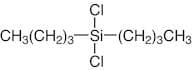
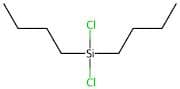
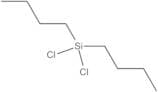
Dibutyldichlorosilane, with the CAS number 3449-28-3, is an organosilicon compound characterized by its structure, which includes two butyl groups and two chlorine atoms attached to a silicon atom. This colorless to pale yellow liquid is known for its reactivity, particularly in hydrolysis, where it can react with moisture to form silanol and hydrochloric acid. It has a relatively low boiling point and is soluble in organic solvents, making it useful in various chemical applications. Dibutyldichlorosilane is primarily utilized as a precursor in the synthesis of silicone polymers and as a coupling agent in surface modification processes. Its chemical properties allow it to participate in reactions that form siloxane bonds, which are essential in creating silicone materials. However, it is important to handle this compound with care, as it can be corrosive and poses health hazards upon exposure. Proper safety measures should be taken when working with dibutyldichlorosilane to mitigate risks associated with its chemical reactivity and potential toxicity.
Formula:C8H18Cl2Si
InChI:InChI=1S/C8H18Cl2Si/c1-3-5-7-11(9,10)8-6-4-2/h3-8H2,1-2H3
InChI key:InChIKey=NJKDOKBDBHYMAH-UHFFFAOYSA-N
SMILES:[Si](CCCC)(CCCC)(Cl)Cl
Synonyms:
  • Dibutyldichlorosilane
  • Ls 2250
  • Silane, dibutyldichloro-
Sort by

Purity (%)
0
100
|
0
|
50
|
90
|
95
|
100
Found 4 products.
  • Dibutyldichlorosilane

    CAS:
    Formula:C8H18Cl2Si
    Purity:>94.0%(GC)
    Color and Shape:Colorless to Light yellow clear liquid
    Molecular weight:213.22

    Ref: 3B-D2704

    5g
    98.00€
    25g
    308.00€
  • Di-n-butyldichlorosilane

    CAS:
    Formula:C8H18Cl2Si
    Purity:94%
    Color and Shape:Liquid
    Molecular weight:213.2200

    Ref: IN-DA003PNX

    1g
    62.00€
    5g
    136.00€
    25g
    238.00€
    100g
    To inquire
    250mg
    25.00€
  • Dibutyldichlorosilane

    CAS:
    Dibutyldichlorosilane
    Purity:94%

    Ref: 54-OR1028117

    1g
    38.00€
    5g
    109.00€
    25g
    275.00€
    100g
    986.00€
    250mg
    32.00€
  • DI-n-BUTYLDICHLOROSILANE

    CAS:
    <p>Alkyl Silane - Conventional Surface Bonding<br>Aliphatic, fluorinated aliphatic or substituted aromatic hydrocarbon substituents are the hydrophobic entities which enable silanes to induce surface hydrophobicity. The organic substitution of the silane must be non-polar. The hydrophobic effect of the organic substitution can be related to the free energy of transfer of hydrocarbon molecules from an aqueous phase to a homogeneous hydrocarbon phase. A successful hydrophobic coating must eliminate or mitigate hydrogen bonding and shield polar surfaces from interaction with water by creating a non-polar interphase. Although silane and silicone derived coatings are in general the most hydrophobic, they maintain a high degree of permeability to water vapor. This allows coatings to breathe and reduce deterioration at the coating interface associated with entrapped water. Since ions are not transported through non-polar silane and silicone coatings, they offer protection to composite structures ranging from pigmented coatings to rebar reinforced concrete. A selection guide for hydrophobic silanes can be found on pages 22-31 of the Hydrophobicity, Hydrophilicity and Silane Surface Modification brochure.<br>Di-n-butyldichlorosilane; Dichlorodi-n-butylsilane<br></p>
    Formula:C8H18Cl2Si
    Purity:96%
    Color and Shape:Straw Liquid
    Molecular weight:213.22

    Ref: 3H-SID3203.0

    10g
    To inquire
    2kg
    To inquire
    50g
    To inquire
    18kg
    To inquire
    750g
    To inquire