CAS 34522-69-5
:5,7-dibromoquinoline
Description:
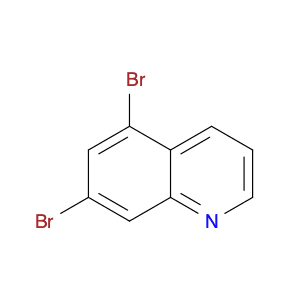
5,7-Dibromoquinoline is a heterocyclic organic compound characterized by the presence of a quinoline structure, which consists of a fused benzene and pyridine ring. The compound features two bromine substituents located at the 5 and 7 positions of the quinoline ring, which significantly influence its chemical properties and reactivity. It is typically a solid at room temperature and may exhibit a range of colors depending on its purity and crystalline form. 5,7-Dibromoquinoline is known for its potential applications in medicinal chemistry, particularly in the development of pharmaceuticals, due to its biological activity and ability to interact with various biological targets. The presence of bromine atoms enhances its lipophilicity and can affect its solubility in organic solvents. Additionally, this compound may participate in various chemical reactions, such as electrophilic substitutions or coupling reactions, making it a valuable intermediate in organic synthesis. Safety data should be consulted, as halogenated compounds can pose environmental and health risks.
Formula:C9H5Br2N
InChI:InChI=1/C9H5Br2N/c10-6-4-8(11)7-2-1-3-12-9(7)5-6/h1-5H
SMILES:c1cc2c(cc(cc2nc1)Br)Br
Synonyms:- 34522-69-5
Sort by
Purity (%)
0
100
|
0
|
50
|
90
|
95
|
100
Found 4 products.
5,7-Dibromoquinoline
CAS:5,7-Dibromoquinoline is a ligand that has an antiproliferative effect on cancer cells. It is a quinoline derivative that has been shown to have cytotoxic activity against the mouse fibroblast cell line MCF-7. The photophysical and fluorescence properties of 5,7-dibromoquinoline have been extensively studied and found to be dependent on the number of bromine substituents. This compound has also been shown to inhibit cancer cells in vitro. 5,7-Dibromoquinoline may act by interfering with cellular processes such as protein synthesis and DNA replication.Formula:C9H5Br2NPurity:Min. 95%Molecular weight:286.95 g/mol