CAS 3457-66-7
:α-Bromocaprolactam
Description:
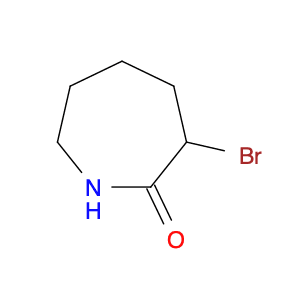
α-Bromocaprolactam, with the CAS number 3457-66-7, is a cyclic amide that belongs to the class of lactams. It is characterized by the presence of a bromine atom at the alpha position relative to the carbonyl group in the caprolactam structure. This compound typically appears as a colorless to pale yellow liquid or solid, depending on its purity and temperature. It is soluble in organic solvents such as ethanol and acetone but has limited solubility in water. The presence of the bromine atom imparts unique reactivity, making it useful in various chemical synthesis processes, particularly in the production of polymers and other organic compounds. α-Bromocaprolactam can undergo nucleophilic substitution reactions, which are valuable in the synthesis of more complex molecules. Additionally, it is important to handle this compound with care due to its potential toxicity and the need for appropriate safety measures during its use in laboratory or industrial settings.
Formula:C6H10BrNO
InChI:InChI=1S/C6H10BrNO/c7-5-3-1-2-4-8-6(5)9/h5H,1-4H2,(H,8,9)
InChI key:InChIKey=ZOGNPJHCXKAYAJ-UHFFFAOYSA-N
SMILES:BrC1C(=O)NCCCC1
Synonyms:- 3-Bromo-azepan-2-one
- α-Bromocaprolactam
- 3-Bromohexahydro-2H-azepin-2-one
- 2H-Azepin-2-one, 3-bromohexahydro-
- 3-Bromoazepan-2-one
Sort by
Purity (%)
0
100
|
0
|
50
|
90
|
95
|
100
Found 4 products.
2-Aza-7-bromocycloheptanone
CAS:2-Aza-7-bromocycloheptanone is a heterocyclic system that can be synthesized from the condensation of ethyl 2-bromocaproate and triethyloxonium chloride. This compound has been shown to have lactam ring opening activity, as well as the ability to form azepine rings with amines. The synthesis of this compound is limited by its instability, which may be due to the presence of an azepine group. The ethylation of this heterocycle leads to a more stable product with increased lactam ring opening activity.
Formula:C6H10BrNOPurity:Min. 80 Area-%Color and Shape:PowderMolecular weight:192.05 g/mol