CAS 3486-35-9
:Zinc carbonate
Description:
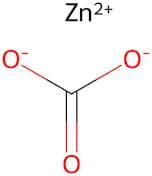
Zinc carbonate, with the chemical formula ZnCO₃ and CAS number 3486-35-9, is an inorganic compound that appears as a white, odorless powder. It is relatively insoluble in water but can dissolve in acidic solutions, releasing carbon dioxide. Zinc carbonate occurs naturally as the mineral smithsonite and is often used in various applications, including as a pigment, in ceramics, and in the production of zinc salts. It has a relatively low melting point and can decompose upon heating to yield zinc oxide and carbon dioxide. In terms of safety, zinc carbonate is generally considered to have low toxicity, but it should be handled with care to avoid inhalation of dust or prolonged skin contact. Its properties make it useful in the pharmaceutical industry as an antacid and in agriculture as a micronutrient for plants. Overall, zinc carbonate is a versatile compound with applications across multiple fields, including materials science and environmental chemistry.
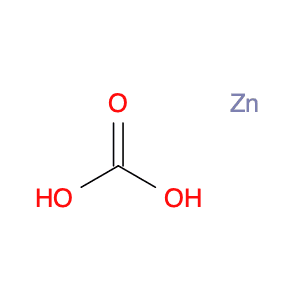
Formula:CH2O3·Zn
InChI:InChI=1S/CH2O3.Zn/c2-1(3)4;/h(H2,2,3,4);
InChI key:InChIKey=ONIOAEVPMYCHKX-UHFFFAOYSA-N
SMILES:C(=O)(O)O.[Zn]
Synonyms:- 222-477-6
- Bayoxide Z Transparent
- Carbonate de zinc
- Carbonato De Cinc
- Carbonic acid, zinc salt (1:1)
- Transparent Zinc White
- Zinc Oxide Transparent
- Zinc carbonate (1:1)
- Zinc carbonate (ZnCO3)
- Zinc carbonate (ZnCO<sub>3</sub>)
- Zinc monocarbonate
- Zinc(+2) Cation Carbonate
- Zinkcarbonat
- [Carbonato(2-)-kappa~2~O,O']zinc
- zinc, [carbonato(2-)-kappaO,kappaO']-
- Zinc carbonate
- Zinc carbonate
- See more synonyms
Sort by
Purity (%)
0
100
|
0
|
50
|
90
|
95
|
100
Found 3 products.
Zinc carbonate
CAS:Zinc carbonate is a compound that contains zinc and carbonate ions. It is a white powder that is insoluble in water. Zinc carbonate has been shown to react with sodium hydroxide to form the soluble salt sodium carbonate, which has the formula NaZn(CO)xHO. The product of this reaction is a crystalline solid that can be used as an antacid or buffer solution. Zinc carbonate also reacts with reactive functional groups such as amines and alcohols, leading to the formation of new compounds. This process can be used for the synthesis of new polymeric matrices, such as those that are biocompatible and resistant to enzymatic degradation.Formula:CO3ZnPurity:Min. 95%Color and Shape:PowderMolecular weight:125.39 g/mol