CAS 34984-16-2
:2,6-Pyridinedimethanamine
Description:
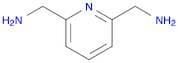
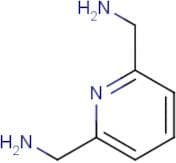
2,6-Pyridinedimethanamine, also known as 2,6-diaminopyridine, is an organic compound characterized by its pyridine ring substituted with two methanamine groups at the 2 and 6 positions. This compound typically appears as a colorless to pale yellow solid and is soluble in water and various organic solvents. It exhibits basic properties due to the presence of amino groups, which can participate in protonation and form salts with acids. 2,6-Pyridinedimethanamine is often utilized in organic synthesis and as a building block in the production of pharmaceuticals, agrochemicals, and dyes. Its reactivity is influenced by the electron-withdrawing nature of the pyridine ring, which can affect the nucleophilicity of the amine groups. Additionally, this compound may have applications in the development of materials and as a ligand in coordination chemistry. Safety data should be consulted, as with any chemical, to ensure proper handling and usage in laboratory settings.
Formula:C7H11N3
Synonyms:- 2,6-Bis(aminomethyl)pyridine
- 2,6-PyridinediMethanaMine
- 2,6-Pyridinediyldimethanamine
- 2,6-Bis(aminomethyl)pyridine, min. 95%
- 2,6-BIS(AMINOMETHYL)PYRIDINE,MIN.95%
- Pyridine-2,6-diyldimethanamine
Sort by
Purity (%)
0
100
|
0
|
50
|
90
|
95
|
100
Found 5 products.
2,6-Bis(aminomethyl)pyridine, min. 95%
CAS:2,6-Bis(aminomethyl)pyridine, min. 95%
Formula:C7H11N3Purity:95%Color and Shape:low melting yellow solidMolecular weight:137.182,6-PyridinediMethanaMine
CAS:Formula:C7H11N3Purity:95%Color and Shape:SolidMolecular weight:137.18232,6-Pyridinediyldimethanamine
CAS:2,6-Pyridinediyldimethanamine is a reactive molecule that can be used in clinical studies. It has been shown to have an effect on mammalian cells, and it can also be used for structural studies of the molecule. This compound is mainly used as a chelate ligand in hydrogen bonding reactions. The kinetic of the reaction between 2,6-pyridinediyldimethanamine and chloride has been studied experimentally and found to follow second-order kinetics. X-ray crystal structures show that this compound forms a hydrogen bond with chloride ions.Formula:C7H11N3Purity:Min. 95%Color and Shape:Clear LiquidMolecular weight:137.18 g/mol