CAS 35000-15-8
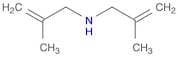
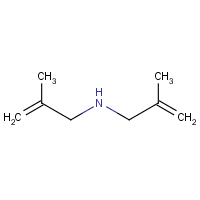
:Dimethallylamine
Description:
Dimethallylamine is an organic compound classified as an amine, specifically a tertiary amine. It features a nitrogen atom bonded to two allyl groups and one methyl group, which contributes to its unique reactivity and properties. This compound is typically a colorless to pale yellow liquid with a characteristic amine odor. Dimethallylamine is known for its ability to participate in various chemical reactions, including polymerization and as a building block in the synthesis of other organic compounds. It is soluble in water and organic solvents, making it versatile for different applications. Due to its structure, it can act as a nucleophile, engaging in reactions with electrophiles. Safety considerations are important when handling dimethallylamine, as it can be irritating to the skin, eyes, and respiratory system. Additionally, it is essential to store it in a cool, well-ventilated area away from incompatible substances. Overall, dimethallylamine is significant in chemical synthesis and industrial applications, particularly in the production of polymers and surfactants.
Formula:C8H15N
InChI:InChI=1/C8H15N/c1-7(2)5-9-6-8(3)4/h9H,1,3,5-6H2,2,4H3
SMILES:C=C(C)CNCC(=C)C
Synonyms:- N,N-Dimethallylamine
- 2-methyl-N-(2-methylprop-2-en-1-yl)prop-2-en-1-amine
Sort by
Purity (%)
0
100
|
0
|
50
|
90
|
95
|
100
Found 4 products.
Dimethallylamine
CAS:Dimethallylamine is a monomer that can be used as a polymerization initiator. Dimethallylamine has been shown to react with hydrochloric acid in an efficient method for the synthesis of polydimethylsiloxane. Dimethallylamine reacts with fatty acids to form esters and amines, which are structural components of many polymers. Dimethallylamine can also be used as a cross-linking agent in cellulose derivatives such as nitrocellulose and cellulose acetate butyrate.Formula:C8H15NPurity:Min. 95%Molecular weight:125.21 g/mol