CAS 3504-40-3
:Samarium(III)isopropoxide
Description:
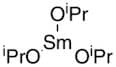
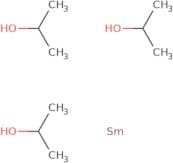
Samarium(III) isopropoxide is an organometallic compound with the formula Sm(OiPr)3, where iPr represents the isopropyl group. It is characterized by its coordination chemistry, where the samarium ion is in a +3 oxidation state, coordinated by three isopropoxide ligands. This compound typically appears as a white to yellow solid and is soluble in organic solvents, making it useful in various chemical applications, particularly in organic synthesis and materials science. Samarium(III) isopropoxide is known for its role as a precursor in the preparation of samarium-based catalysts and in the synthesis of samarium-containing materials. It is also utilized in the production of samarium metal and other samarium compounds. Due to the presence of samarium, a rare earth element, this compound exhibits unique electronic and magnetic properties. However, it should be handled with care, as it can be moisture-sensitive and may react with water, releasing isopropanol. Proper safety precautions should be taken when working with this compound in a laboratory setting.
Formula:C9H21O3Sm
InChI:InChI=1/3C3H7O.Sm/c3*1-3(2)4;/h3*3H,1-2H3;/q3*-1;+3
SMILES:CC(C)[O-].CC(C)[O-].CC(C)[O-].[Sm]
Synonyms:- Samariumisopropoxide
- Samarium(3+) Tripropan-2-Olate
- Samarium iii isopropoxide
- Samarium(III) isopropoxide
Sort by
Purity (%)
0
100
|
0
|
50
|
90
|
95
|
100
Found 2 products.
Samarium(III) i-propoxide, min. 97% (99.9%-Sm) (REO)
CAS:<p>Samarium(III) i-propoxide, min. 97% (99.9%-Sm) (REO)</p>Formula:Sm(OC3H7)3Purity:(99.9%-Sm)Color and Shape:cream colored pwdr.Molecular weight:1535.94Samarium(III) isopropoxide
CAS:<p>Samarium(III) isopropoxide (Sm(0)IPO) is a metal ion that has a slow reaction rate with hydrochloric acid in the presence of nitrogen atoms. It can be used to form chiral compounds. Sm(0)IPO, which has fluorescence properties, is used as an analytical reagent in organic chemistry and biochemistry. The reactions of Sm(0)IPO are initiated by the protonation of the hydroxyl group on the metal ion followed by nucleophilic attack by the amino acid serine protease. This reaction results in the formation of an acyl halide.</p>Formula:C9H21O3SmPurity:Min. 95%Molecular weight:327.62 g/mol