CAS 35154-55-3
:Natsudaidain
Description:
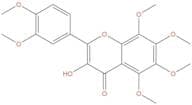
Natsudaidain, with the CAS number 35154-55-3, is a natural compound classified as a flavonoid, specifically a flavanone. It is primarily derived from the plant species of the citrus family, particularly from the fruit of the Japanese citrus, Citrus natsudaidai. This compound is known for its potential health benefits, including antioxidant, anti-inflammatory, and antimicrobial properties. Natsudaidain exhibits a yellowish color and is soluble in organic solvents, which is typical for many flavonoids. Its structure features a chromone backbone, which is characteristic of flavonoids, contributing to its biological activity. Research has indicated that natsudaidain may play a role in various therapeutic applications, including cardiovascular health and cancer prevention, although further studies are necessary to fully elucidate its mechanisms of action and efficacy. As with many natural compounds, its safety profile and potential side effects are also areas of ongoing research.
Formula:C21H22O9
InChI:InChI=1/C21H22O9/c1-24-11-8-7-10(9-12(11)25-2)16-15(23)14(22)13-17(26-3)19(27-4)21(29-6)20(28-5)18(13)30-16/h7-9,23H,1-6H3
InChI key:InChIKey=CCJBNIRSVUKABH-UHFFFAOYSA-N
SMILES:O(C)C1=C2C(=C(OC)C(OC)=C1OC)C(=O)C(O)=C(O2)C3=CC(OC)=C(OC)C=C3
Synonyms:- 4H-1-Benzopyran-4-one, 2-(3,4-dimethoxyphenyl)-3-hydroxy-5,6,7,8-tetramethoxy-
- Flavone, 3-hydroxy-3′,4′,5,6,7,8-hexamethoxy-
- 2-(3,4-Dimethoxyphenyl)-3-hydroxy-5,6,7,8-tetramethoxy-4H-1-benzopyran-4-one
- Natsudaidain
- 4H-1-benzopyran-4-one, 2-(3,4-dimethoxyphenyl)-3-hydroxy-5,6,7,8-tetramethoxy-
- 3-Hydroxy-5,6,7,8,3′,4′-hexamethoxyflavone
Sort by
Purity (%)
0
100
|
0
|
50
|
90
|
95
|
100
Found 2 products.
Natsudaidain
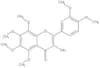
CAS:Natsudaidain is a flavonoid glycoside, which is a compound naturally occurring in specific citrus fruits, such as the natsudaidai orange (Citrus natsudaidai). As a secondary metabolite, it primarily serves plant defense and contributes to the color and flavor of the fruit. Natsudaidain functions through a mode of action linked to its antioxidant properties, as it effectively scavenges free radicals. These radicals are implicated in cellular damage and oxidative stress, which can lead to various pathological conditions including cancer.
Formula:C21H22O9Purity:Min. 95%Molecular weight:418.40 g/mol