CAS 35172-59-9
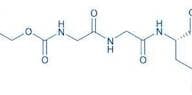
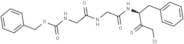
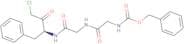
:N-cbz-gly-gly-phe chloromethyl ketone
Description:
N-Cbz-gly-gly-phe chloromethyl ketone, with the CAS number 35172-59-9, is a synthetic organic compound that belongs to the class of peptide derivatives. It features a chloromethyl ketone functional group, which is significant for its reactivity, particularly in peptide synthesis and modification. The "N-Cbz" designation indicates that the amino group is protected by a benzyloxycarbonyl (Cbz) group, enhancing the stability and solubility of the compound. The presence of glycine (gly) and phenylalanine (phe) residues suggests that it is a dipeptide derivative, which may exhibit biological activity relevant to peptide chemistry. This compound is often utilized in research settings, particularly in the development of peptide-based drugs or as a reagent in organic synthesis. Its reactivity can be attributed to the chloromethyl ketone moiety, which can participate in nucleophilic substitution reactions, making it a valuable intermediate in the synthesis of more complex molecules. Proper handling and storage conditions are essential due to its reactive nature.
Formula:C22H24ClN3O5
Synonyms:- Z-Gly-Gly-Phe-chloromethylketone
Sort by
Purity (%)
0
100
|
0
|
50
|
90
|
95
|
100
Found 3 products.
Z-Gly-Gly-Phe-chloromethylketone
CAS:Z-GGF-CMK, a site-specific inhibitor of chymotrypsin.Formula:C22H24ClN3O5Purity:> 97%Color and Shape:White PowderMolecular weight:445.9Z-GGF-CMK
CAS:Z-GGF-CMK, a protease inhibitor, impedes ClpP1P2 and proteasome activity and demonstrates cytotoxic effects on HepG2 cells, with a CC50 value of 125 μM [1].Formula:C22H24ClN3O5Purity:98%Color and Shape:SolidMolecular weight:445.9Z-Gly-Gly-Phe-chloromethylketone
CAS:Glycine is a non-essential amino acid that is used in the synthesis of proteins and other biomolecules. It has three homologues: alanine, serine, and threonine. Glycine is synthesized from serine through a series of reactions that include conversion to glyoxylate by serine hydroxymethyltransferase, followed by conversion to glycolate by glyoxylate reductase and finally conversion to glycine by glyceraldehyde-3-phosphate dehydrogenase. Glycine also plays an important role in the biosynthesis of heme, collagen, erythropoietin, and various neurotransmitters. Glycine participates in the synthesis of proteins within the reticulum lumen and endoplasmic reticulum (ER) membranes. It is localized in cytoplasmic vesicles called late Golgi apparatus (LGA). The LGA are found next to theFormula:C22H24ClN3O5Purity:Min. 95%Molecular weight:445.9 g/mol