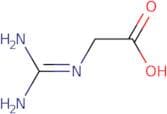
CAS 352-97-6
:Guanidinoacetic acid
Description:
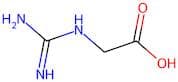
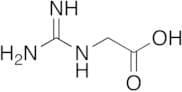
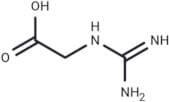
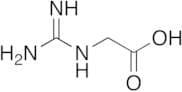
Guanidinoacetic acid, also known as glycocyamine, is an organic compound with the chemical formula C3H7N5O2. It is characterized by the presence of a guanidine group and an acetic acid moiety, making it a derivative of both amino acids and guanidine. This compound is a naturally occurring intermediate in the biosynthesis of creatine, which is crucial for energy metabolism in muscle tissues. Guanidinoacetic acid is typically a white crystalline solid that is soluble in water, reflecting its polar nature due to the presence of amino and carboxylic acid functional groups. It has been studied for its potential benefits in enhancing athletic performance and cognitive function, as it serves as a precursor to creatine. Additionally, it may have implications in various biochemical pathways and is of interest in research related to metabolic disorders. Safety data indicates that it should be handled with care, as with many chemical substances, to avoid potential health risks.
Formula:C3H7N3O2
InChI:InChI=1S/C3H7N3O2/c4-3(5)6-1-2(7)8/h1H2,(H,7,8)(H4,4,5,6)
InChI key:InChIKey=BPMFZUMJYQTVII-UHFFFAOYSA-N
SMILES:C(NC(=N)N)C(O)=O
Synonyms:- 2-(Diaminomethylideneazaniumyl)acetate
- 2-Carbamimidamidoacetic acid
- 2-Guanidinoacetic acid
- 2-[(Diaminomethylidene)amino]acetic acid
- 2-[[Amino(imino)methyl]amino]acetic acid
- Acetic acid, [(aminoiminomethyl)amino]-
- Betacyamine
- Betasyamine
- Glycine, N-(aminoiminomethyl)-
- Glycine, N-amidino-
- Glycocyamine
- Guanidine, (carboxymethyl)-
- Guanidinoacetic acid
- Guanidoacetic Acid
- Guanidylacetic acid
- Guanyl glycine
- N-(Aminoiminomethyl)glycine
- N-(diaminomethylidene)glycine
- N-Amidinoglycine
- NSC 1901
- NSC 227847
- NSC 26360
- α-Guanidinoacetic acid
- See more synonyms
Sort by
Purity (%)
0
100
|
0
|
50
|
90
|
95
|
100
Found 12 products.
Glycocyamine
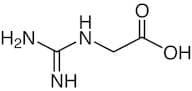
CAS:Formula:C3H7N3O2Purity:>97.0%(T)Color and Shape:White to Almost white powder to crystalMolecular weight:117.112-{[amino(imino)methyl]amino}acetic acid
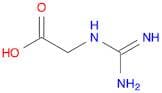
CAS:2-{[amino(imino)methyl]amino}acetic acidFormula:C3H7N3O2Purity:98%Color and Shape: white solidMolecular weight:117.11g/molGuanidinoacetic acid
CAS:Controlled ProductFormula:C3H7N3O2Color and Shape:NeatMolecular weight:117.11Glycocyamine
CAS:Glycocyamine, a creatine precursor and dietary arginine substitute, aids in bird energy balance and indicates renal health.Formula:C3H7N3O2Purity:99.42%Color and Shape:SolidMolecular weight:117.11Guanidinoacetic Acid
CAS:Applications Guanidinoacetic Acid is an important marker for renal failure, in kidney transplantation, and for the renal metabolic activity.
References Zugno, A., et al.: Neurochem. Res., 33, 1804 (2008), Debray, F., et al.: Neurol., 71, 44 (2008), da Silva, R., et al.: Am. J. Physiol., 296, E256 (2009),Formula:C3H7N3O2Color and Shape:WhiteMolecular weight:117.112-Guanidinoacetic acid
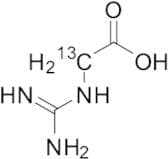
CAS:Formula:C3H7N3O2Purity:95%Color and Shape:Solid, No data available.Molecular weight:117.108Guanidinoacetic-13C Acid
CAS:Controlled ProductFormula:CC2H7N3O2Color and Shape:NeatMolecular weight:118.099Guanidinoacetic acid
CAS:Guanidinoacetic acid is a metabolite of creatine and is formed by reaction with the amino acid arginine. It is also synthesized from guanidinoacetate, which is derived from the oxidation of arginine. Guanidinoacetic acid can be found in human serum and eye disorders such as glaucoma. The analytical method for guanidinoacetic acid involves the conversion of guanidine to guanidinoacetic acid using nitrous acid, followed by gas chromatographic separation of the products. The concentration of guanidinoacetic acid in human serum has been shown to have an inverse relationship with body mass index (BMI). This means that people with a higher BMI have lower levels of guanidinoacetic acids in their blood than those who are thinner. Guanidinoacetate has also been shown to increase energy metabolism and inhibit glycolysis in humans.Formula:C3H7N3O2Purity:Min. 95%Molecular weight:117.11 g/mol


![2-{[amino(imino)methyl]amino}acetic acid](/_next/image/?url=https%3A%2Fstatic.cymitquimica.com%2Fproducts%2F54%2Fthumb%2FOR27969.jpg&w=3840&q=75)