CAS 35436-83-0
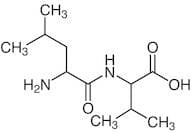
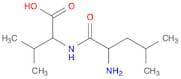
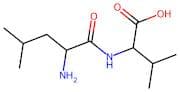
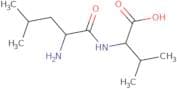
:H-DL-Leu-DL-Val-OH
Description:
H-DL-Leu-DL-Val-OH, with the CAS number 35436-83-0, is a synthetic dipeptide composed of two amino acids: leucine (Leu) and valine (Val). This compound features both L- and D- forms of these amino acids, which are enantiomers that can exhibit different biological activities. The presence of the hydroxyl group (-OH) indicates that it is a hydroxy derivative, which can influence its solubility and reactivity. Dipeptides like H-DL-Leu-DL-Val-OH are often studied for their potential applications in pharmaceuticals, nutrition, and biochemistry, particularly in relation to protein synthesis and metabolic processes. The characteristics of this substance include its ability to form hydrogen bonds due to the hydroxyl group, which can affect its interactions with other molecules. Additionally, the stereochemistry of the amino acids may impact its biological function and efficacy in various applications. Overall, H-DL-Leu-DL-Val-OH serves as an important model compound for understanding peptide behavior and interactions in biological systems.
Formula:C11H22N2O3
InChI:InChI=1/C11H22N2O3/c1-6(2)5-8(12)10(14)13-9(7(3)4)11(15)16/h6-9H,5,12H2,1-4H3,(H,13,14)(H,15,16)
SMILES:CC(C)CC(C(=NC(C(C)C)C(=O)O)O)N
Synonyms:- DL-Leucyl-DL-valine
- Leucylvaline
Sort by
Purity (%)
0
100
|
0
|
50
|
90
|
95
|
100
Found 4 products.
DL-Leucyl-DL-valine
CAS:Formula:C11H22N2O3Purity:min. 98.0 %Color and Shape:White to Almost white powder to crystalMolecular weight:230.31H-DL-LEU-DL-VAL-OH H2O
CAS:Formula:C11H22N2O3Purity:98%Color and Shape:SolidMolecular weight:230.3040Leucylvaline
CAS:Leucylvaline is a molecule that belongs to the amide category of drugs. It is a multidrug transporter inhibitor and has been shown to have skin-conditioning effects. Leucylvaline inhibits the transport rate of peptide hormones, such as vasoactive intestinal peptide, from blood vessels in the skin, which leads to its moisturizing properties. This drug also has antioxidant properties and can be used as a model system for studying cellular physiology. Leucylvaline binds to the carbonyl group of oxidized lipids and prevents their oxidation by acting as an amphiphatic molecule.
Formula:C11H22N2O3Color and Shape:PowderMolecular weight:230.3 g/mol