CAS 3558-69-8
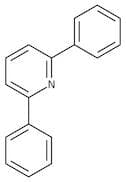
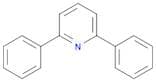
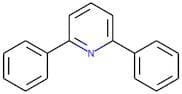
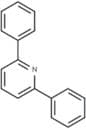
:2,6-Diphenylpyridine
Description:
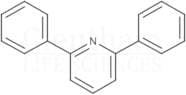
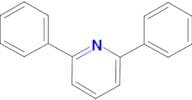
2,6-Diphenylpyridine is an organic compound characterized by its pyridine ring substituted at the 2 and 6 positions with phenyl groups. This structure contributes to its unique chemical properties, including its ability to act as a ligand in coordination chemistry and its potential applications in organic electronics and photonics. The compound is typically a solid at room temperature and exhibits a relatively high melting point. It is known for its stability and resistance to oxidation, making it suitable for various chemical reactions. Additionally, 2,6-Diphenylpyridine can exhibit interesting photophysical properties, such as fluorescence, which can be leveraged in dye applications. Its solubility varies depending on the solvent, often being more soluble in organic solvents than in water. The compound's molecular formula reflects its composition, and its structural features contribute to its reactivity and interactions with other chemical species. Overall, 2,6-Diphenylpyridine is a versatile compound with significant implications in both academic research and industrial applications.
Formula:C17H13N
InChI:InChI=1S/C17H13N/c1-3-8-14(9-4-1)16-12-7-13-17(18-16)15-10-5-2-6-11-15/h1-13H
InChI key:InChIKey=PJUOHDQXFNPPRF-UHFFFAOYSA-N
SMILES:C=1(N=C(C=CC1)C2=CC=CC=C2)C3=CC=CC=C3
Synonyms:- Diphenylpyridine
- NSC 133378
- Pyridine, 2,6-diphenyl-
- 2,6-Diphenylpyridine
Sort by
Purity (%)
0
100
|
0
|
50
|
90
|
95
|
100
Found 7 products.
2,6-Diphenylpyridine
CAS:Formula:C17H13NPurity:>99.0%(GC)Color and Shape:White to Light yellow to Light orange powder to crystalMolecular weight:231.302,6-Diphenylpyridine, 97%
CAS:2,6-Diphenylpyridine is used as a tridentate [C?N?C] dianionic ligand in organogold(III) chemistry, an intermediate. It readily adds an electron from alkali metals in THF to give a radical anion which is a powerful reducing agent. This Thermo Scientific Chemicals brand product was originally part ofFormula:C17H13NPurity:97%Color and Shape:White to cream, Crystals or powder or crystalline powderMolecular weight:231.302,6-diphenylpyridine
CAS:2,6-diphenylpyridinePurity:98%Color and Shape:White SolidMolecular weight:231.29182g/mol2,6-Diphenylpyridine
CAS:2,6-Diphenylpyridine is toxic to MDA-MB-231 cells and has anticancer potential.Formula:C17H13NPurity:99.21%Color and Shape:SolidMolecular weight:231.29