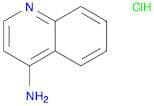
CAS 35654-61-6
:4-Quinolinamine, hydrochloride (1:1)
Description:
4-Quinolinamine, hydrochloride (1:1), with the CAS number 35654-61-6, is a chemical compound characterized by its quinoline structure, which consists of a bicyclic aromatic system. This compound features an amino group (-NH2) at the 4-position of the quinoline ring, contributing to its basicity and potential reactivity. As a hydrochloride salt, it is typically encountered in a crystalline form, which enhances its solubility in water and facilitates its use in various applications, including pharmaceuticals and organic synthesis. The presence of the hydrochloride indicates that the compound is protonated, which can influence its biological activity and interaction with other substances. 4-Quinolinamine derivatives are often studied for their potential therapeutic properties, including antimicrobial and antitumor activities. Safety data should be consulted for handling and usage, as with any chemical substance, to ensure proper precautions are taken due to potential toxicity or reactivity.
Formula:C9H8N2·ClH
InChI:InChI=1S/C9H8N2.ClH/c10-8-5-6-11-9-4-2-1-3-7(8)9;/h1-6H,(H2,10,11);1H
InChI key:InChIKey=GNZIHPAAJVXCAS-UHFFFAOYSA-N
SMILES:NC=1C2=C(N=CC1)C=CC=C2.Cl
Synonyms:- 4-Quinolinamine, monohydrochloride
- 4-Quinolinamine, hydrochloride (1:1)
Sort by
Purity (%)
0
100
|
0
|
50
|
90
|
95
|
100
Found 2 products.
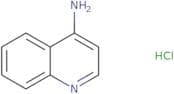
Quinolin-4-amine hydrochloride
CAS:Quinolin-4-amine hydrochloride is a DNA polymerase inhibitor. It inhibits the transcription of viral genes by binding to the DNA polymerase enzyme, thereby preventing transcription and replication of viral DNA. Quinolin-4-amine hydrochloride has shown to be effective against various viruses in tissue culture, including herpes simplex virus, vaccinia virus, and HIV. The compound has also been shown to inhibit the growth of influenza A virus in cell culture. Quinolin-4-amine hydrochloride is useful as a diagnostic agent for identifying unvaccinated individuals who are at risk for acquiring certain viruses or as an antiviral agent in tissue culture or cell culture during outbreaks of virulent viruses such as HIV or hepatitis C virus.Formula:C9H9ClN2Purity:Min. 95%Molecular weight:180.63 g/mol