CAS 35675-44-6
:(4-methylphenyl)acetyl chloride
Description:
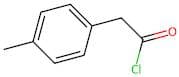
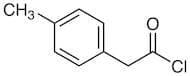
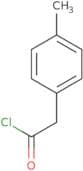
(4-Methylphenyl)acetyl chloride, also known as p-tolyl acetyl chloride, is an organic compound characterized by the presence of an acetyl chloride functional group attached to a para-substituted methylphenyl ring. Its molecular structure features a benzene ring with a methyl group at the para position relative to the acetyl chloride group. This compound is typically a colorless to pale yellow liquid with a pungent odor, indicative of its reactivity. It is known for its role as an acylating agent in organic synthesis, particularly in the formation of amides and esters. The presence of the acetyl chloride group makes it highly reactive, especially towards nucleophiles, and it can undergo hydrolysis in the presence of water, releasing hydrochloric acid. Safety precautions are essential when handling this compound, as it can be corrosive and irritating to the skin, eyes, and respiratory system. Proper storage in a cool, dry place, away from moisture, is also crucial to maintain its stability and prevent unwanted reactions.
Formula:C9H9ClO
InChI:InChI=1/C9H9ClO/c1-7-2-4-8(5-3-7)6-9(10)11/h2-5H,6H2,1H3
SMILES:Cc1ccc(cc1)CC(=O)Cl
Synonyms:- Benzeneacetyl chloride, 4-methyl-
- (4-Methylphenyl)acetyl chloride
Sort by
Purity (%)
0
100
|
0
|
50
|
90
|
95
|
100
Found 4 products.
2-(p-Tolyl)acetyl Chloride
CAS:Formula:C9H9ClOPurity:>98.0%(GC)(T)Color and Shape:Colorless to Light yellow clear liquidMolecular weight:168.62p-Tolyl-acetyl chloride
CAS:Formula:C9H9ClOPurity:95.0%Color and Shape:Liquid, ClearMolecular weight:168.62P-Tolylacetyl chloride
CAS:P-Tolylacetyl chloride is a benzyl compound that has potent cytotoxicity. It is used in the synthesis of phenylacetates, which are intermediates for the synthesis of various pharmaceuticals. P-Tolylacetyl chloride has been shown to induce apoptosis in human cancer cells, including HCT116 and other tumor cell lines. This agent also induces DNA fragmentation and inhibits protein synthesis by inhibiting translation initiation factors. P-Tolylacetyl chloride also has an antitumor effect by inhibiting tumor growth in mice with subcutaneous leukemia. It is thought that this effect may be due to its ability to inhibit the production of reactive oxygen species (ROS) and reduce levels of intracellular glutathione.Formula:C9H9ClOPurity:Min. 95%Molecular weight:168.62 g/mol