CAS 35714-20-6
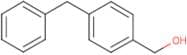
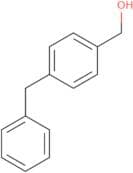
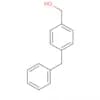
:4-(Phenylmethyl)benzenemethanol
Description:
4-(Phenylmethyl)benzenemethanol, also known as benzyl 4-benzylphenylmethanol, is an organic compound characterized by its structure, which features a benzyl group attached to a phenyl ring and a hydroxymethyl group. This compound is typically a white to off-white solid at room temperature and is soluble in organic solvents such as ethanol and acetone, but has limited solubility in water due to its hydrophobic aromatic components. It exhibits properties typical of alcohols, including the ability to participate in hydrogen bonding, which can influence its reactivity and interactions in various chemical environments. The presence of multiple aromatic rings contributes to its stability and potential applications in organic synthesis, pharmaceuticals, and as a building block in the development of more complex molecules. Additionally, its unique structure may impart specific biological activities, making it of interest in medicinal chemistry. Safety data should be consulted for handling and exposure guidelines, as with any chemical substance.
Formula:C14H14O
InChI:InChI=1S/C14H14O/c15-11-14-8-6-13(7-9-14)10-12-4-2-1-3-5-12/h1-9,15H,10-11H2
InChI key:InChIKey=MHZOFWFRCQRXIH-UHFFFAOYSA-N
SMILES:C(C1=CC=C(CO)C=C1)C2=CC=CC=C2
Synonyms:- Benzyl alcohol, p-benzyl-
- 4-(Phenylmethyl)benzenemethanol
- Benzenemethanol, 4-(phenylmethyl)-
- p-Hydroxymethyldiphenylmethane
- 4-Benzylbenzyl alcohol
Sort by
Purity (%)
0
100
|
0
|
50
|
90
|
95
|
100
Found 2 products.
(4-Benzylphenyl)methanol
CAS:4-Benzylphenylmethanol is a natural compound that belongs to the class of amines. It is found in pyrethrum, which is derived from plants of the genus Chrysanthemum. 4-Benzylphenylmethanol has been used as a supplement for insect control, usually as an additive to natural pyrethrins. This substance has been shown to be effective against insect species such as the German cockroach, the fruit fly, and the mosquito. 4-Benzylphenylmethanol also has insecticidal properties by preventing insects from breaking down the chemical bonds in their cell membranes. This allows for more rapid death of insects and lessens their ability to regenerate cells after contact with this substance.
Formula:C14H14OPurity:Min. 95%Molecular weight:198.27 g/mol