CAS 36190-95-1
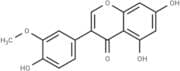
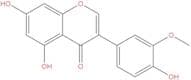
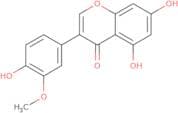
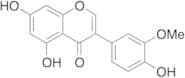
:4H-1-Benzopyran-4-one,5,7-dihydroxy-3-(4-hydroxy-3-methoxyphenyl)-
3'-O-Methylorobol
CAS:3'-O-Methylorobol: moderate antioxidant, potential analgesic, boosts osteoblast differentiation.Formula:C16H12O6Purity:98%Color and Shape:SolidMolecular weight:300.26Orobol-3'-methyl ether
CAS:Orobol-3'-methyl ether is a synthetic flavonoid compound, which is derived from natural flavonoids that are typically extracted from plants. Flavonoids like Orobol-3'-methyl ether are important due to their roles in various biological processes. This compound operates primarily by interacting with enzymes, potentially inhibiting or modifying their activity. The methyl ether modification can enhance its biological activity or stability, making it a valuable tool in biochemical research.Formula:C16H12O6Purity:Min. 98 Area-%Molecular weight:300.26 g/mol3'-Methoxy-4',5,7-trihydroxyisoflavone
CAS:Controlled ProductApplications 3'-Methoxy-4',5,7-trihydroxyisoflavone is a derivative of Genistein (G350000); a compound that exhibits specific inhibitory activity against tyrosine kinases, including autophosphorylation of epidermal growth factor receptor kinase (IC50 - 2.6uM). Also inhibits other protein kinases through competitive inhibition of ATP. Inhibits tumor cell proliferation and induces tumor cell differentiation. Produces cell-cycle arrest and apoptosis in Jurat T-leukemia cells. However, it prevents anti-CD3 monoclonal antibody-induced thymic apoptosis. Genistein also inhibits topoisomerase II activity in vitro. Genistein has also been shown to inhibit the action of GABA on recombinant GABAA receptors 2.
References Akiyama, T., et al.: J. Biol. Chem., 262, 5592 (1987); O'Dell, T.J., et al.: Nature, 353, 588 (1991); Aharonovits, O., et al.: Biochim Biophys. Acta, 1112, 181 (1992); Platanias, L.C., et al.: J. Biol. Chem., 267, 24053 (1992); Yoshida, H., et al.: Biochim. Biophys. Acta, 1137, 321 (1992); Uckun, F.M., et al.: Science, 267, 886 (1995); Merck Index 12th ed. 4395, Huang, R.Q.; Fang, M.J.; Dillon, G.H., Mol. Brain Res. 67: 177-183 (1999)Formula:C16H12O6Color and Shape:NeatMolecular weight:300.26