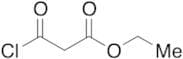
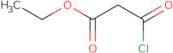
CAS 36239-09-5
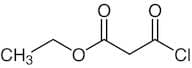
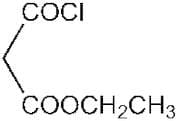
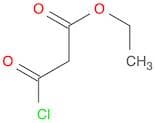
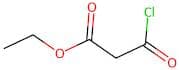
:Ethyl 3-chloro-3-oxopropanoate
Description:
Ethyl 3-chloro-3-oxopropanoate, with the CAS number 36239-09-5, is an organic compound characterized by its ester functional group and a chloro substituent. It typically appears as a colorless to pale yellow liquid with a fruity odor. This compound features a three-carbon chain with a keto group (carbonyl) and an ethyl ester, making it a versatile intermediate in organic synthesis. Ethyl 3-chloro-3-oxopropanoate is known for its reactivity, particularly in nucleophilic substitution reactions due to the presence of the chloro group, which can be replaced by various nucleophiles. It is often used in the synthesis of pharmaceuticals, agrochemicals, and other fine chemicals. The compound is soluble in organic solvents, and its stability can be influenced by factors such as temperature and the presence of moisture. Safety precautions should be taken when handling this substance, as it may pose health risks if inhaled or ingested, and appropriate protective equipment should be used.
Formula:C5H7ClO3
InChI:InChI=1S/C5H7ClO3/c1-2-9-5(8)3-4(6)7/h2-3H2,1H3
InChI key:InChIKey=KWFADUNOPOSMIJ-UHFFFAOYSA-N
SMILES:C(C(OCC)=O)C(Cl)=O
Synonyms:- (Chlorocarbonyl)acetic acid ethyl ester
- (Chloroformyl)Acetic Acid Ethyl Ester
- (Ethoxycarbonyl)acetyl chloride
- 2-(Ethoxycarbonyl)acetyl chloride
- 3-Chloro-3-Oxo-Propanoicaciethylester
- 3-Chloro-3-oxopropanoic acid ethyl ester
- 3-Ethoxy-3-oxopropanoyl chloride
- Acetic acid, (chloroformyl)-, ethyl ester
- Aurora Ka-3051
- Carbethoxyacetyl chloride
- Carbethoxyethanoyl chloride
- Carboethoxyacetyl chloride
- Ethanyl Malonyl Chloride
- Ethoxymalonyl chloride
- Ethyl (chlorocarbonyl)acetate
- Ethyl 2-(Chlorocarbonyl)Acetate
- Ethyl 3-Chloro-3-Oxopropionate
- Ethyl 3-chloro-3-oxopropanoate
- Ethyl 3-oxo-3-chloropropanoate
- Ethyl malonoyl chloride
- Ethyl malonyl monochloride
- Ethyl(chloroformyl)acetate
- Ethylpropanedioyl Dichloride
- Malonic acid chloride ethyl ester
- Malonic acid chloride monoethyl ester
- Malonic acid ethyl ester chloride
- Malonic acid monoethyl ester chloride
- Malonic chloride ethyl ester
- Malonic ethyl ester chloride
- Monoethyl malonyl chloride
- See more synonyms
Sort by
Purity (%)
0
100
|
0
|
50
|
90
|
95
|
100
Found 7 products.
Ethyl Malonyl Chloride
CAS:Formula:C5H7ClO3Purity:>97.0%(GC)(T)Color and Shape:White to Yellow to Green clear liquidMolecular weight:150.56Ethyl malonyl chloride, 95%
CAS:Ethyl malonyl chloride is used in the syntheses of methanofullerodendimers and 3-pyrrolin-2-ones. It plays a vital role in the preparation of 3,5-disubstituted 1,2,4-oxadiazole derivatives, which are potential peptidomimetic building blocks. It is a versatile acylating agent for propargyl alcohols,Formula:C5H7ClO3Purity:95%Color and Shape:Liquid, Clear colorless to yellowMolecular weight:150.56ethyl 3-chloro-3-oxopropanoate
CAS:Formula:C5H7ClO3Purity:95%Color and Shape:LiquidMolecular weight:150.5603Ethyl malonyl chloride
CAS:Ethyl malonyl chlorideFormula:C5H7ClO3Purity:95%Color and Shape: clear. almost colourless liquidMolecular weight:150.56028g/molEthyl Malonyl chloride
CAS:Formula:C5H7ClO3Purity:95.0%Color and Shape:Liquid, ClearMolecular weight:150.56Ethyl Malonyl Chloride
CAS:Controlled ProductStability Moisture Sensitive
Applications Ethyl Malonyl Chloride is used as a reagent in the synthesis of novel thiadiazoloacrylamide analogs as inhibitors of dengue-2 virus NS2B/NS3 protease. Ethyl Malonyl Chloride is also used as a reagent in the synthesis of quinolone-benzylpiperidine derivatives as acetylcholinesterase inhibitors and antioxidant hybrids for Alzheimer disease.
Not a dangerous good if item is equal to or less than 1g/ml and there is less than 100g/ml in the package
References Liu, H., et al.: Bioorg. Med. Chem., 22, 6344 (2014); Pudlo, M., et al.: Bioorg. Med. Chem., 22, 2496 (2014)Formula:C5H7ClO3Color and Shape:NeatMolecular weight:150.56Ethyl malonyl chloride
CAS:Ethyl malonyl chloride is a compound that belongs to the class of acylating agents. It reacts with the carbonyl group of an organic acid, such as malonic acid, to form an ester. This reaction is catalyzed by a nucleophile such as water or alcohols. Ethyl malonyl chloride has been shown to have anticancer activity and can inhibit protein synthesis in muscle cells by blocking receptor activity and growth factor signaling pathways.Formula:C5H7ClO3Purity:90%MinMolecular weight:150.56 g/mol