CAS 3637-63-6
:Cyclooctanemethanol
Description:
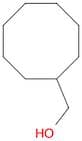
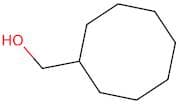
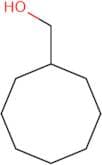
Cyclooctanemethanol, with the CAS number 3637-63-6, is an organic compound characterized by its cyclic structure and hydroxyl functional group. It features a cyclooctane ring, which consists of eight carbon atoms arranged in a cyclic formation, with a methanol group (-CH2OH) attached to one of the carbon atoms. This compound is typically a colorless liquid at room temperature and exhibits moderate solubility in water due to the presence of the hydroxyl group, which can engage in hydrogen bonding. Cyclooctanemethanol is known for its relatively low volatility and can be used as a solvent or intermediate in organic synthesis. Its chemical properties include the ability to undergo typical alcohol reactions, such as oxidation and esterification. Additionally, the presence of the cyclooctane ring may impart unique steric and electronic properties, influencing its reactivity and interactions with other molecules. Overall, cyclooctanemethanol is a versatile compound with applications in various fields, including organic chemistry and materials science.
Formula:C9H18O
InChI:InChI=1S/C9H18O/c10-8-9-6-4-2-1-3-5-7-9/h9-10H,1-8H2
InChI key:InChIKey=ZHPBLHYKDKSZCQ-UHFFFAOYSA-N
SMILES:C(O)C1CCCCCCC1
Synonyms:- (Hydroxymethyl)cyclooctane
- Ai3-38562
- Cyclooctylmethanol
- NSC 100744
- Cyclooctanemethanol
Sort by
Purity (%)
0
100
|
0
|
50
|
90
|
95
|
100
Found 4 products.
Cyclooctylmethanol
CAS:Cyclooctylmethanol is a cancer drug that belongs to the class of amides. It has been shown to have anti-inflammatory properties and can be used in the treatment of bladder infections, as well as infectious diseases. Cyclooctylmethanol binds to the platelet membrane and inhibits the growth of cancer cells. This compound also has an inhibitory effect on nicotinic acetylcholine receptors and can be used to treat Alzheimer's disease. Cyclooctylmethanol has been shown to have growth factor activity, which may be due to its hydroxyl group or fatty acid moiety. This antibiotic also reacts with ruthenium complex, which causes it to become more active against bacteria.Formula:C9H18OPurity:Min. 95%Molecular weight:142.23 g/mol