CAS 36437-19-1
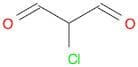
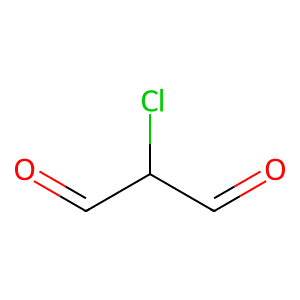
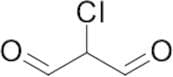
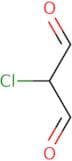
:chloropropanedial
Description:
Chloropropanedial, also known as 3-chloropropanedial, is an organic compound characterized by the presence of a chlorinated propanediol structure with two aldehyde functional groups. Its molecular formula typically includes carbon, hydrogen, chlorine, and oxygen atoms, reflecting its classification as a chlorinated aldehyde. The compound is a colorless to pale yellow liquid at room temperature and is soluble in water and various organic solvents, which is indicative of its polar nature due to the aldehyde groups. Chloropropanedial is known for its reactivity, particularly in nucleophilic addition reactions, owing to the electrophilic nature of the aldehyde carbonyls. It may also exhibit antimicrobial properties, making it of interest in various applications, including pharmaceuticals and agrochemicals. Safety considerations are important when handling this compound, as it may pose health risks, including irritation to the skin and respiratory system. Proper storage and handling protocols should be followed to mitigate any potential hazards associated with its use.
Formula:C3H3ClO2
InChI:InChI=1/C3H3ClO2/c4-3(1-5)2-6/h1-3H
SMILES:C(=O)C(C=O)Cl
Synonyms:- Chloromalonaldehyde
- Propanedial, 2-Chloro-
- Propanedial, chloro-
- 2-Chloro-3-Hydroxyprop-2-Enal
- 2-Chloromalonaldehyde
Sort by
Purity (%)
0
100
|
0
|
50
|
90
|
95
|
100
Found 6 products.
2-Chloromalonaldehyde
CAS:2-ChloromalonaldehydeFormula:C3H3ClO2Purity:98%Color and Shape: brown solidMolecular weight:106.51g/mol2-Chloromalonaldehyde
CAS:Controlled ProductFormula:C3H3ClO2Color and Shape:NeatMolecular weight:106.5082-Chloromalonaldehyde
CAS:2-Chloromalonaldehyde is a reactive chemical that can be used as a pharmaceutical intermediate. It has been shown to have anti-inflammatory properties and is often used in pharmaceutical preparations. 2-Chloromalonaldehyde has shown an ability to bind with integrin receptors and inhibit the production of pro-inflammatory molecules, such as prostaglandins. This compound has also been shown to have a photoelectron spectrum that includes an intramolecular hydrogen bond, which contributes to its biological activity.Formula:C3H3ClO2Purity:(%) Min. 90%Color and Shape:PowderMolecular weight:106.51 g/mol