CAS 36669-02-0
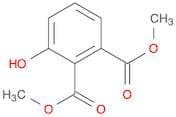
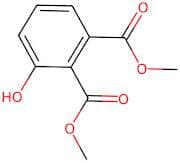
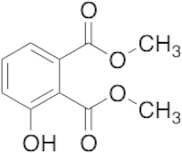
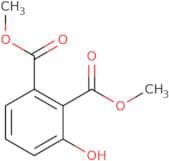
:1,2-Benzenedicarboxylic acid, 3-hydroxy-, dimethyl ester
Description:
1,2-Benzenedicarboxylic acid, 3-hydroxy-, dimethyl ester, commonly known as dimethyl 3-hydroxyphthalate, is an organic compound characterized by its ester functional groups and a hydroxyl group attached to a benzene ring. This compound features two carboxylate groups that are esterified with methanol, resulting in its dimethyl ester form. It is typically a colorless to pale yellow liquid or solid, depending on the temperature and purity. The presence of the hydroxyl group contributes to its solubility in polar solvents, while the aromatic structure provides stability and potential for various chemical reactions. This compound is often used in the synthesis of other organic materials, as well as in applications such as plasticizers, solvents, and intermediates in organic synthesis. Its chemical properties include moderate volatility and reactivity, making it suitable for various industrial applications. Safety data should be consulted for handling and exposure guidelines, as with any chemical substance.
Formula:C10H10O5
Sort by
Purity (%)
0
100
|
0
|
50
|
90
|
95
|
100
Found 5 products.
Dimethyl 3-hydroxyphthalate
CAS:Formula:C10H10O5Purity:98%Color and Shape:SolidMolecular weight:210.1834dimethyl 3-hydroxyphthalate
CAS:Formula:C10H10O5Purity:98%Color and Shape:SolidMolecular weight:210.185Dimethyl 3-Hydroxyphthalate
CAS:Controlled ProductApplications Dimethyl 3-Hydroxyphthalate is used as a reactant in the synthesis of proteolysis targeting chimeras.
References Schiedel, Matthias, et al.: J. of Med. Chem., 61(2), 482-491 (2018); Lebraud, Honorine, et al.: ACS Cent. Sci., 2(12), 927-934 (2016);Formula:C10H10O5Color and Shape:NeatMolecular weight:210.18Dimethyl 3-hydroxyphthalate
CAS:Dimethyl 3-hydroxyphthalate is a compound that is used in the production of phthalic acid esters. It can be synthesized by reacting chlorine with phthalic anhydride. The reaction system consists of aqueous solution of dimethyl 3-hydroxyphthalate, chlorine, and water. The electrons are accepted by chloride ions and the reaction proceeds through an electron transfer mechanism. Dimethyl 3-hydoxyphthalate undergoes desorption and spin resonance spectroscopy to determine its kinetic properties. Radical species are generated during the process and these radicals may react with other molecules to form new compounds, leading to mineralization or process efficiency. Phthalic acid esters are produced from this compound by oxidative polymerization reactions.Formula:C10H10O5Purity:Min. 95%Molecular weight:210.18 g/mol