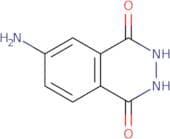
CAS 3682-14-2
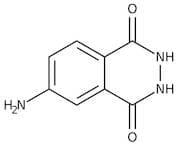
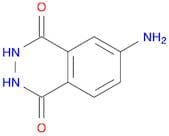
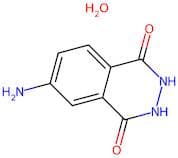
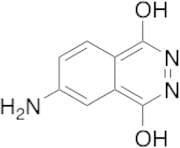
:4-Aminophthalhydrazide
Description:
4-Aminophthalhydrazide, with the CAS number 3682-14-2, is an organic compound characterized by its hydrazide functional group attached to a phthalic acid derivative. This compound typically appears as a crystalline solid and is known for its potential applications in various fields, including dye synthesis and as an intermediate in organic synthesis. It features an amino group (-NH2) that enhances its reactivity, making it useful in the formation of azo dyes and other complex organic molecules. The presence of both the hydrazide and amino functionalities allows for diverse chemical reactivity, including nucleophilic substitutions and coupling reactions. Additionally, 4-Aminophthalhydrazide may exhibit specific solubility characteristics, often being soluble in polar solvents while showing limited solubility in non-polar solvents. Safety data indicates that, like many organic compounds, it should be handled with care, as it may pose health risks upon exposure. Overall, 4-Aminophthalhydrazide is a versatile compound with significant relevance in synthetic organic chemistry.
Formula:C8H9N3O3
InChI:InChI=1/C8H7N3O2.H2O/c9-4-1-2-5-6(3-4)8(13)11-10-7(5)12;/h1-3H,9H2,(H,10,12)(H,11,13);1H2
SMILES:c1cc2c(cc1N)c(nnc2O)O.O
Synonyms:- 6-Amino-2,3-dihydro-1,4-phthalazinedione
- 6-Amino-2,3-Dihydrophthalazine-1,4-Dione
- 6-Amino-2,3-Dihydrophthalazine-1,4-Dione Hydrate (1:1)
Sort by
Purity (%)
0
100
|
0
|
50
|
90
|
95
|
100
Found 7 products.
Isoluminol [Chemiluminescence reagent]
CAS:Formula:C8H7N3O2Purity:>98.0%(T)(HPLC)Color and Shape:Light yellow to Amber to Dark green powder to lumpMolecular weight:177.164-Aminophthalhydrazide, 98%
CAS:A chemiluminescent moleculeFormula:C8H7N3O2Purity:98%Color and Shape:Pale yellow, PowderMolecular weight:177.161,4-Phthalazinedione, 6-amino-2,3-dihydro-
CAS:Formula:C8H7N3O2Purity:97%Color and Shape:SolidMolecular weight:177.16014-Aminophthalhydrazide
CAS:Controlled ProductApplications 4-Aminophthalhydrazide is a chemiluminescent compound.
References Proskurnina, E. V., et al.: J. Analyt. Chem., 72, 751 (2017); Tian, F., et al.: Guoji Jianyan Yixue Zazhi, 36, 1823 (2015); Ji, X., et al.: Talanta, 150, 666 (2016)Formula:C8H7N3O2Color and Shape:NeatMolecular weight:177.166-Amino-2,3-dihydrophthalazine-1,4-dione
CAS:Formula:C8H7N3O2Purity:97%Color and Shape:SolidMolecular weight:177.163Isoluminol
CAS:Isoluminol is a chromogenic molecule with a hydrophilic nature due to the location of the amino group in the phthalate ring, making it impermeable to cell membranes. It is used as a chemiluminescent probe to specifically detect extracellular reactive oxygen species (ROS) metabolites, which are known to be toxic for intra-erythrocytic parasites. Isoluminol-enhanced chemiluminescence has been employed as a sensitive method to study the release of superoxide anion from human neutrophils. Additionally, isoluminol has been utilized to measure extracellular ROS, distinguishing it from luminol, which is used to measure total ROS. Furthermore, isoluminol is suggested to detect mainly extracellular production of ROS, providing a lower chemiluminescence signal compared to luminol. Isoluminol is used as a chemiluminescence amplifier with pronounced affinity to oxidants outside polymorphonuclear leukocytes (PMNLs). It has been reported that isoluminol is less able to traverse biological membranes, making it suitable for detecting the release of NADPH oxidase-derived superoxide ions. Moreover, isoluminol is more hydrophilic and polar than luminol, as indicated by its lower capacity to form intramolecular hydrogen bridges. The molecule's impermeability ensures that only extracellularly excreted ROS are detected in the assay. In analytical chemistry, isoluminol is used as a chemiluminescence probe for labeling proteins and biomolecules, and its chemiluminescent oxidation is enhanced in the presence of certain catalysts. Isoluminol is also employed in open-tubular capillary chromatography systems for the elution of labeled biomolecules. Additionally, isoluminol has been used in microchip chromatography for the analysis of biomolecules.Formula:C8H7N3O2Purity:Min. 95%Molecular weight:177.05383
![Isoluminol [Chemiluminescence reagent]](/_next/image/?url=https%3A%2Fstatic.cymitquimica.com%2Fproducts%2F3B%2Fthumb%2FA5300.jpg&w=3840&q=75)