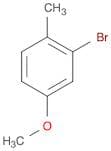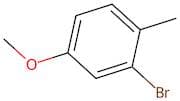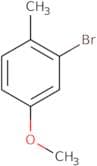
CAS 36942-56-0
:Benzene, 2-bromo-4-methoxy-1-methyl-
- 2-Bromo-4-Methoxy-1-Methyl-benzene
- 2-Bromo-4-methoxytoluene
- 3-Bromo-4-methylanisole
2-bromo-4-methoxy-1-methylbenzene
CAS:Formula:C8H9BrOPurity:98%Color and Shape:LiquidMolecular weight:201.06052-Bromo-4-Methoxy-1-Methyl-Benzene
CAS:2-Bromo-4-Methoxy-1-Methyl-BenzenePurity:98%Molecular weight:201.00g/mol3-Bromo-4-methylanisole
CAS:3-Bromo-4-methylanisole is a natural product that has been shown to selectively activate the transcription factor, proliferator activated receptor γ (PPARγ), which plays a central role in cell differentiation and lipid metabolism. 3-Bromo-4-methylanisole is a competitive inhibitor of the catalytic site of PPARγ and also inhibits the activity of other transcriptional factors. This compound has been shown to stimulate the production of peroxisomes, which are organelles involved in lipid metabolism. 3-Bromo-4-methylanisole can be synthesized from toluene by a two step process involving electrolysis followed by chlorination. It can also be prepared from magnolol, a natural product isolated from Magnolia officinalis, by oxidation with potassium dichromate and sodium bisulfite.
Formula:C8H9BrOPurity:Min. 95%Color and Shape:PowderMolecular weight:201.06 g/molRef: 3D-FB10592
Discontinued product