CAS 3707-98-0
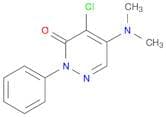
:4-chloro-5-(dimethylamino)-2-phenylpyridazin-3(2H)-one
Description:
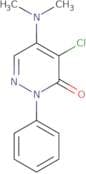
4-Chloro-5-(dimethylamino)-2-phenylpyridazin-3(2H)-one is a chemical compound characterized by its pyridazine core, which is a six-membered heterocyclic ring containing two nitrogen atoms. This compound features a chloro substituent at the 4-position and a dimethylamino group at the 5-position, contributing to its unique chemical properties. The presence of a phenyl group at the 2-position enhances its aromatic character and may influence its reactivity and solubility. Typically, compounds of this nature exhibit moderate to high stability under standard conditions, but their reactivity can vary based on the functional groups present. The dimethylamino group can act as a nucleophile, potentially participating in various chemical reactions, including alkylation or acylation. Additionally, the compound may exhibit biological activity, making it of interest in pharmaceutical research. Its CAS number, 3707-98-0, allows for easy identification in chemical databases and literature. Overall, this compound's structure suggests potential applications in medicinal chemistry and material science.
Formula:C12H12ClN3O
InChI:InChI=1/C12H12ClN3O/c1-15(2)10-8-14-16(12(17)11(10)13)9-6-4-3-5-7-9/h3-8H,1-2H3
Synonyms:- 4-Chloro-5-dimethylamino-2-phenyl-3(2H)-pyridazinone
- 4-Chloro-5-dimethylamino-2-phenyl-2H-pyridazin-3-one
- SAN 9785
Sort by
Purity (%)
0
100
|
0
|
50
|
90
|
95
|
100
Found 2 products.
SAN 9785
CAS:SAN 9785 is a herbicide that inhibits photosynthetic activity by interfering with the synthesis of diacylglycerol. It also interferes with enzyme activities in photosystems and the production of fatty acids. Low-light conditions, such as those found in leaves, are sufficient to activate SAN 9785. The polyunsaturated fatty acid linolenic acid has been shown to be a target for this herbicide. SAN 9785 has been used to study the physiological effects on plants at sublethal doses. This herbicide also inhibits carotenoid biosynthesis and causes chlorophyll loss in leaves due to its inhibition of plastid enzymes.
Formula:C12H12ClN3OPurity:Min. 95%Molecular weight:249.7 g/mol