CAS 37107-06-5
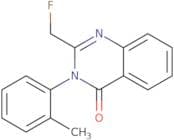
:2-(fluoromethyl)-3-(2-methylphenyl)quinazolin-4(3H)-one
Description:
2-(Fluoromethyl)-3-(2-methylphenyl)quinazolin-4(3H)-one is a synthetic organic compound belonging to the quinazolinone class, characterized by its fused bicyclic structure that includes a quinazoline moiety. This compound features a fluoromethyl group and a 2-methylphenyl substituent, which contribute to its unique chemical properties. It typically exhibits moderate to high lipophilicity due to the presence of aromatic rings, influencing its solubility and bioavailability. The fluoromethyl group can enhance metabolic stability and alter the compound's reactivity, making it of interest in medicinal chemistry, particularly in the development of pharmaceuticals. The compound may exhibit biological activity, potentially acting as an inhibitor or modulator in various biochemical pathways. Its molecular structure allows for various interactions with biological targets, which can be explored in drug design and development. As with many quinazolinones, it may also possess potential applications in treating conditions such as cancer or neurological disorders, although specific biological activities would require further investigation through experimental studies.
Formula:C16H13FN2O
InChI:InChI=1/C16H13FN2O/c1-11-6-2-5-9-14(11)19-15(10-17)18-13-8-4-3-7-12(13)16(19)20/h2-9H,10H2,1H3
SMILES:Cc1ccccc1n1c(CF)nc2ccccc2c1=O
Sort by
Purity (%)
0
100
|
0
|
50
|
90
|
95
|
100
Found 1 products.
2-(Fluoromethyl)-3-(2-Methylphenyl)Quinazolin-4-One
CAS:Controlled Product2-(Fluoromethyl)-3-(2-Methylphenyl)Quinazolin-4-One (RUG) is a new synthetic drug that is structurally related to diazepam and lorazepam. The drug has been shown to have sedative, muscle relaxant, anti-convulsant, and analgesic properties in animal studies. RUG has been shown to inhibit the activities of enzymes such as serum cholinesterase and acetylcholinesterase in animals. It also stimulates salivation and inhibits muscle contractions, which may be due to its ability to enhance the effects of gamma aminobutyric acid (GABA). When administered orally or intraperitoneally, RUG produces a dose-dependent reduction in spontaneous activity in rats. These effects are similar to those produced by rugulovasine, a natural indole alkaloid from the plant Uncaria rhynchophylla.Formula:C16H13FN2OPurity:Min. 95%Molecular weight:268.29 g/mol