CAS 372-09-8
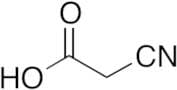
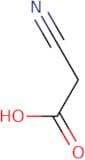
:Cyanoacetic acid
Description:
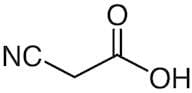
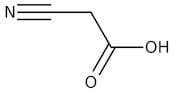
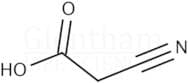
Cyanoacetic acid, with the CAS number 372-09-8, is a colorless to pale yellow liquid that is known for its distinctive properties and applications in organic synthesis. It features both a cyano group (-CN) and a carboxylic acid group (-COOH), making it a versatile compound in the field of chemistry. The presence of the cyano group contributes to its reactivity, allowing it to participate in various chemical reactions, including nucleophilic additions and condensation reactions. Cyanoacetic acid is soluble in water and organic solvents, which enhances its utility in laboratory settings. It is primarily used as an intermediate in the synthesis of pharmaceuticals, agrochemicals, and other organic compounds. Additionally, it can serve as a building block for the preparation of heterocyclic compounds. Due to its potential toxicity and the presence of the cyano group, handling cyanoacetic acid requires appropriate safety precautions, including the use of personal protective equipment and proper ventilation.
Formula:C3H3NO2
InChI:InChI=1S/C3H3NO2/c4-2-1-3(5)6/h1H2,(H,5,6)
InChI key:InChIKey=MLIREBYILWEBDM-UHFFFAOYSA-N
SMILES:C(C(O)=O)C#N
Synonyms:- 2-Cyanoacetic Acid
- Acetic Acid, Cyano
- Acetic acid, 2-cyano-
- Acide cyanoacetique
- Acido Cianoacetico
- Cyanessigsaeure
- Cyanessigsaure
- Cyano Acetic Acid
- Cyanoacetate
- Cyanoethanoic acid
- Malonic acid mononitrile
- Malonic mononitrile
- Methyl and Ethyl esters
- Monocyanoacetic acid
- Nsc 5571
- See more synonyms
Sort by
Purity (%)
0
100
|
0
|
50
|
90
|
95
|
100
Found 9 products.
Cyanoacetic Acid
CAS:Formula:C3H3NO2Purity:>98.0%(T)Color and Shape:White to Almost white powder to crystalMolecular weight:85.06Cyanoacetic acid, 97%
CAS:Cyanoacetic acid is used in pharmaceutical industry for producing vitamin B6 and caffeine. It is also used in making dyes, agricultural chemicals, and in the synthesis of phenylacetic acid esters. It acts as a precursor cyanoacrylates viz. ethyl cyanoacrylate. This Thermo Scientific Chemicals brandFormula:C3H3NO2Purity:97%Color and Shape:White to cream, Crystals or powder or crystalline powder or fused/lumpy solidMolecular weight:85.06Cyanoacetic acid
CAS:Formula:NCCH2CO2HColor and Shape:White to off-white powder to crystalsMolecular weight:85.06Cyanoacetic Acid
CAS:Controlled ProductApplications Cyanoacetic acid is a dangerous compound that is commonly used as a synthetic intermediate. Cyanoacetic acid has also been found to have teratogenic effects on rat embryos.
Not a dangerous good if item is equal to or less than 1g/ml and there is less than 100g/ml in the package
References Simpson, M., et al.: Food Chem. Toxicol., 24, 634 (1986)Formula:C3H3NO2Color and Shape:NeatMolecular weight:85.06Cyanoacetic acid - 70% aqueous solution
CAS:Cyanoacetic acid is an antimicrobial agent that can be used for the treatment of bowel disease, autoimmune diseases, and eye disorders. Cyanoacetic acid is a substrate molecule for sodium carbonate, which can be used to produce sodium carbonate by reacting with water. The reaction solution is then added to human serum or malonic acid to produce sodium carbonate, which can be used as a drug. Electrochemical impedance spectroscopy has been used as a tool to study the mechanism of cyanoacetic acid in treating inflammatory bowel disease.Formula:C3H3NO2Purity:Min. 95%Color and Shape:Yellow PowderMolecular weight:85.06 g/molCyanoacetic Acid-(Cyano-13C)
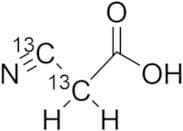
CAS:Controlled ProductFormula:C2CH3NO2Color and Shape:NeatMolecular weight:87.047Cyanoacetic acid
CAS:Cyanoacetic acid is a reactive molecule that contains a hydroxyl group, an electrochemical double bond, and two carbonyl groups. It is also a pharmacological agent and a substrate molecule for many reactions. Cyanoacetic acid has been shown to have anti-inflammatory properties in human serum by inhibiting the production of prostaglandins. It also inhibits the enzyme fatty acid synthase, which may be responsible for the reduction in arachidonic acid levels in patients with autoimmune diseases. This compound has been used as a treatment for eye disorders such as pterygium and conjunctivitis.Formula:C3H3NO2Purity:Min. 95%Color and Shape:White PowderMolecular weight:85.06 g/mol