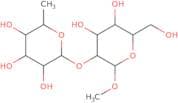
CAS 37288-45-2
:Fucosidase, 1,2-a-L-
Description:
Fucosidase, 1,2-α-L- (CAS 37288-45-2) is an enzyme that catalyzes the hydrolysis of fucosidic bonds in glycoproteins and glycolipids, specifically targeting the α-L-fucose residues. This enzyme plays a crucial role in various biological processes, including cell signaling, immune response, and the metabolism of complex carbohydrates. Fucosidases are classified as glycoside hydrolases and are essential for the degradation of fucose-containing oligosaccharides. The enzyme operates optimally at specific pH and temperature ranges, which can vary depending on the source organism. Fucosidase is of particular interest in biochemistry and biotechnology, as it can be utilized in research and therapeutic applications, including the study of glycosylation patterns in diseases and the development of enzyme replacement therapies. Its activity can be influenced by the presence of inhibitors or activators, making it a subject of study for understanding enzyme kinetics and regulation. Overall, fucosidase is a significant enzyme in the field of glycobiology and has implications in both health and disease.
- 1,2-a-L-Fucosidase
- E.C. 3.2.1.63
- a1-2 Fucosidase
Sort by
Purity (%)
0
100
|
0
|
50
|
90
|
95
|
100
Found 1 products.
Methyl 2-O-a-L-fucopyranosyl-b-D-galactoside
CAS:Computational fluid dynamics (CFD) is the study of fluid flow, a subject which has been studied for over two thousand years. The idea of CFD is to use computers to solve the equations that govern fluid flow and to make predictions about the behavior of gases, liquids and complex fluids in various situations. Computational analysis can be used to calculate how air flows around an object such as a car or plane. This allows engineers to create designs with less drag. Computational analysis can also be used in designing buildings, bridges, and other structures that are exposed to large amounts of wind. CFD is a "convective" computational method because it solves problems by using convection-diffusion equations with appropriate boundary conditions. A "transport" computational method solves problems by solving momentum equations and energy conservation equations simultaneously; this method is often more accurate than convective methods but computationally more expensive. A "laminar" computational method solves problems by solving continuity equations. A "naturePurity:Min. 95%