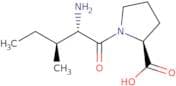
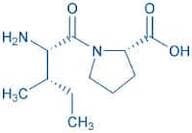
CAS 37462-92-3
:L-Proline, L-isoleucyl-
Description:
L-Proline, L-isoleucyl- is a dipeptide composed of the amino acids proline and isoleucine. It is characterized by its unique structure, where proline, a cyclic amino acid, contributes to the peptide bond formation with isoleucine, a branched-chain amino acid. This dipeptide exhibits properties typical of peptides, such as solubility in water and the ability to form hydrogen bonds, which can influence its biological activity and stability. The presence of proline can impart rigidity to the peptide chain due to its cyclic structure, potentially affecting its conformation and interactions with other biomolecules. L-Proline is known for its role in protein synthesis and cellular functions, while isoleucine is essential for various metabolic processes. The CAS number 37462-92-3 uniquely identifies this compound in chemical databases, facilitating its study and application in fields such as biochemistry and pharmaceuticals. Overall, L-Proline, L-isoleucyl- is significant in biological systems and may have implications in nutrition and therapeutic applications.
Formula:C11H20N2O3
Sort by
Purity (%)
0
100
|
0
|
50
|
90
|
95
|
100
Found 2 products.
H-Ile-Pro-OH
CAS:H-Ile-Pro-OH is an amino acid that is a constituent of sphingolipids, which are important for the metabolism of lipids and other biological substances. H-Ile-Pro-OH can be found in casein as well as oxidation products of casein. It has been used in diagnostic tests to measure levels of hippuric acid in plasma samples. The dietary intake of H-Ile-Pro-OH can be determined by measuring the concentration of this amino acid in plasma samples. Synthetic H-Ile-Pro-OH can also be used for studies on the metabolism of tryptophan. This amino acid has been shown to inhibit chloride ion transport across the cell membrane and fatty acid synthesis, as well as proteolysis and protein degradation by pancreatic enzymes.Formula:C11H20N2O3Purity:Min. 95%Molecular weight:228.29 g/molH-Ile-Pro-OH
CAS:Competitive inhibitor of porcine dipeptidyl peptidase IV (DPP IV), IC₅₀ 0.015 mM.Formula:C11H20N2O3Purity:> 99%Color and Shape:White PowderMolecular weight:228.29