CAS 37515-61-0
:1-Monopalmitolein
Description:
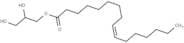
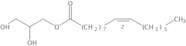
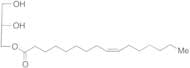
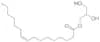
1-Monopalmitolein, also known as 1-palmitoleoylglycerol, is a monoacylglycerol characterized by its structure, which consists of a glycerol backbone esterified with a single palmitoleic acid (a 16-carbon unsaturated fatty acid) at the sn-1 position. This compound is typically a colorless to pale yellow liquid and is soluble in organic solvents, while being less soluble in water due to its hydrophobic fatty acid chain. It exhibits emulsifying properties, making it useful in food and cosmetic formulations. 1-Monopalmitolein is also of interest in biochemistry and nutrition, as it can influence lipid metabolism and cellular signaling pathways. Its presence in various biological systems suggests potential roles in health and disease, particularly in relation to lipid storage and energy metabolism. As with many lipids, it is sensitive to oxidation, which can affect its stability and functionality. Overall, 1-Monopalmitolein is a significant compound in both industrial applications and biological research.
Formula:C19H36O4
InChI:InChI=1/C19H36O4/c1-2-3-4-5-6-7-8-9-10-11-12-13-14-15-19(22)23-17-18(21)16-20/h7-8,18,20-21H,2-6,9-17H2,1H3/b8-7-
InChI key:InChIKey=KVYUBFKSKZWZSV-FPLPWBNLNA-N
SMILES:C(C(OCC(CO)O)=O)CCCCCC/C=C\CCCCCC
Synonyms:- 1-Monopalmitolein
- 1-Monopalmitoleoyl-rac-glycerol
- 1-Palmitoleylglycerol
- 2,3-dihydroxypropyl (9Z)-hexadec-9-enoate
- 9-Hexadecenoic acid, 2,3-dihydroxypropyl ester, (9Z)-
- 9-Hexadecenoic acid, 2,3-dihydroxypropyl ester, (Z)-
- Glyceryl palmitoleate
Sort by
Purity (%)
0
100
|
0
|
50
|
90
|
95
|
100
Found 3 products.
1-Palmitoleoyl glycerol
CAS:1-Palmitoleoyl glycerol is a bioactive monoacylglycerol that inhibits P-glycoprotein in Caco-2 cells and induces thymocyte apoptosis.Formula:C19H36O4Color and Shape:SolidMolecular weight:328.491-Monopalmitolein
CAS:Controlled ProductApplications 1-Monopalmitolein is a component of bitter melons with possible inhibitory effect on the P-glycoprotein activity in intestinal Caco-2 cells. It may also be used as an apoptotic agent in T-cells.
References Konishi, T., et al.: Brit. J. Pharmacol., 143, 379 (2004); Philippoussis, F., et al.: Cell Death and Differentiation, 8, 1103 (2001)Formula:C19H36O4Color and Shape:NeatMolecular weight:328.49