CAS 38025-93-3
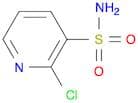
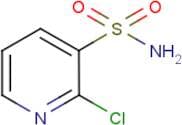
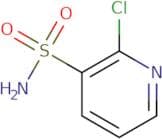
:3-Pyridinesulfonamide, 2-chloro-
Description:
3-Pyridinesulfonamide, 2-chloro- is an organic compound characterized by the presence of a pyridine ring substituted with a sulfonamide group and a chlorine atom. This compound typically exhibits properties associated with both aromatic and heterocyclic compounds, including a relatively high melting point and solubility in polar solvents due to the sulfonamide functional group. The chlorine atom introduces additional reactivity, making it a potential candidate for further chemical modifications. The sulfonamide group contributes to its potential biological activity, as sulfonamides are known for their antibacterial properties. In terms of safety, like many chlorinated compounds, it may pose environmental and health risks, necessitating careful handling and disposal. Its applications can range from pharmaceuticals to agrochemicals, depending on its specific reactivity and biological activity. Overall, 3-Pyridinesulfonamide, 2-chloro- is a compound of interest in both synthetic organic chemistry and medicinal chemistry due to its unique structural features and potential utility.
Formula:C5H5ClN2O2S
Sort by
Purity (%)
0
100
|
0
|
50
|
90
|
95
|
100
Found 4 products.
2-Chloro-pyridine-3-sulphonic acid amide
CAS:2-Chloro-pyridine-3-sulphonic acid amidePurity:95%Color and Shape:SolidMolecular weight:192.62g/mol2-Chloro-pyridine-3-sulfonic acid amide
CAS:Formula:C5H5ClN2O2SPurity:95.0%Color and Shape:SolidMolecular weight:192.622-Chloro-pyridine-3-sulfonic acid amide
CAS:2-Chloro-pyridine-3-sulfonic acid amide is an intermediate in the synthesis of a variety of biologically potent compounds. It is a noncatalytic amidine that can be prepared by the reaction of 2-chloropyridine with sulfur dioxide and ammonia. 2-Chloro-pyridine-3-sulfonic acid amide has been used as a nucleophile to form chlorides, amidines, and other functionalized chlorides. It is also used in the preparation of chlorinated ethers.
Formula:C5H5CIN2O2SPurity:Min. 95%Molecular weight:192.62 g/mol