CAS 3811-04-9
:Potassium chlorate
Description:
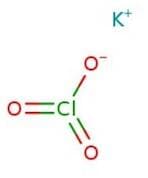
Potassium chlorate (KClO₃) is an inorganic compound characterized by its white crystalline appearance and strong oxidizing properties. It is highly soluble in water and exhibits a high melting point, making it stable under normal conditions. Potassium chlorate is commonly used in various applications, including as a herbicide, in the production of oxygen, and in pyrotechnics due to its ability to release oxygen when decomposed. It is also utilized in laboratories for analytical purposes. However, it is important to handle potassium chlorate with care, as it can be reactive and potentially hazardous, especially when in contact with combustible materials or when subjected to heat or shock. The compound can decompose explosively under certain conditions, releasing chlorine gas and oxygen. Additionally, potassium chlorate is classified as a strong oxidizer, which necessitates proper storage and handling protocols to prevent accidents. Overall, its unique properties make it valuable in various industrial and scientific applications, while also requiring caution due to its reactive nature.
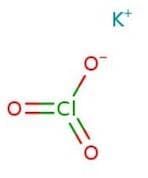
Formula:ClKO3
InChI:InChI=1/ClHO3.K/c2-1(3)4;/h(H,2,3,4);/q;+1/p-1
InChI key:InChIKey=LVEGNRYEXNXVGQ-UHFFFAOYSA-N
SMILES:Cl(=O)(=O)O.[K]
Synonyms:- Anforstan
- Berthollet salt
- Berthollet's salt
- Chlorate de potassium
- Chlorate of potash
- Chlorate of potassium
- Chloric Acid, Potassium Salt
- Chloric acid (HClO3) potassium salt
- Chloric acid (HClO<sub>3</sub>) potassium salt
- Chloric acid potassium salt (KClO3)
- Chloric acid potassium salt (KClO<sub>3</sub>)
- Chloric acid, potassium salt (1:1)
- Clorato De Potasio
- Fekabit
- Kaliumchlorat
- Potassio (clorato di)
- Potassium chlorate (KClO3)
- Potassium chlorate (KClO<sub>3</sub>)
- Potassium chlorate [UN1485] [Oxidizer]
- Potassium oxymuriate
- Potcrate
- Potassium chlorate
- bertholletsalt
- chlorateofpotassium
- potassio[cloratodi][italian]
- potassium[chloratede][french]
- oxymuriateofpotash
- chloratedepotassium[french]
- potassium(chloratede)
- POTASSIUM CHLORATE SUPPLEMENT
- chloratedepotassium
- KALII CHLORAS
- chlorateofpotash
- kaliumchloraat[dutch]
- potassio(chloratodi)
- kaliumchlorat[german]
- See more synonyms
Sort by
Purity (%)
0
100
|
0
|
50
|
90
|
95
|
100
Found 5 products.
Potassium chlorate, ACS, 99.0% min
CAS:It is used in textile printing and dyeing, as a disinfectant, in manufacturing of aniline black and other dyes. It can be utilized as a source of oxygen and also used in pyrotechnics and chemistry demonstrations. Potassium chlorate is useful for the flowering of dimocarpus longan and is a highly eff
Formula:ClKO3Purity:99.0%Molecular weight:122.55Potassium chlorate, 99+%
CAS:Potassium chlorate is used in textile printing and dyeing, as a disinfectant, in manufacturing of aniline black and other dyes. It can be utilized as a source of oxygen and also used in pyrotechnics and chemistry demonstrations. Potassium chlorate is useful for the flowering of dimocarpus longan andFormula:ClKO3Purity:99+%Color and Shape:White, Crystals or powder or crystalline powderMolecular weight:122.55Potassium chlorate
CAS:Formula:KClO3Purity:≥ 99.0%Color and Shape:White crystalline powderMolecular weight:122.55Potassium chlorate, 99% (ACS)
CAS:Potassium chlorate, 99% (ACS)
Formula:KClO3Purity:99%Color and Shape:white pwdr.Molecular weight:122.56Potassium chlorate
CAS:Controlled ProductPotassium chlorate is a strong oxidizing agent and a salt of potassium and chlorate. Potassium chlorate is used as an oxidizer in fireworks, propellants, and for the treatment of wastewater. It can also be used to generate chlorine dioxide, which is used as a disinfectant. Potassium chlorate has been shown to have genotoxic effects on rat liver cells, which may be due to its ability to induce transcriptional regulation by altering DNA methylation status. Chronic exposure to high concentrations of potassium chlorate can cause apical necrosis in rats. This type of necrosis is caused by the accumulation of potassium ions that lead to a disruption in membrane integrity. Chlorates are also known to cause chronic renal toxicity via oxidative stress mechanisms.Formula:ClKO3Purity:Min. 95%Color and Shape:White SolidMolecular weight:122.55 g/mol