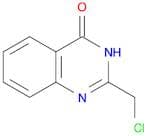
CAS 3817-05-8
:2-(chloromethyl)quinazolin-4(1H)-one
- 2-(chloromethyl)quinazolin-4(3H)-one
- 4(3H)-quinazolinone, 2-(chloromethyl)-
- 4-Quinazolinol, 2-(Chloromethyl)-
2-(Chloromethyl)-4-hydroxyquinazoline
CAS:Formula:C9H7ClN2OPurity:97%Color and Shape:SolidMolecular weight:194.61772-(Chloromethyl)quinazolin-4(3H)-one
CAS:2-(Chloromethyl)quinazolin-4(3H)-onePurity:97%Molecular weight:194.62g/mol2-(Chloromethyl)-4-hydroxyquinazoline
CAS:2-(Chloromethyl)-4-hydroxyquinazolineFormula:C9H7ClN2OPurity:≥95%Color and Shape: white crystalline powderMolecular weight:194.62g/mol2-(Chloromethyl)quinazolin-4(3H)-one
CAS:Formula:C9H7ClN2OPurity:95%Color and Shape:SolidMolecular weight:194.622-(Chloromethyl)quinazolin-4(3H)-one
CAS:2-(Chloromethyl)quinazolin-4(3H)-one is a quinazolinone antibacterial agent. It has been shown to have activity against Staphylococcus species, including methicillin-resistant strains. 2-(Chloromethyl)quinazolin-4(3H)-one binds to the bacterial ribosome and inhibits protein synthesis, leading to cell death. The molecule is nucleophilic, which allows it to react with the ribosomal RNA of bacteria. This drug has also been shown to be cytotoxic in vitro and in vivo against human tumor cells. 2-(Chloromethyl)quinazolin-4(3H)-one has been modified by attaching a benzoyl group at the para position on the phenyl ring or by substituting one of its hydrogens with a methyl group at the para position on the phenyl ring. These modifications have resulted in increased anticancer activity for this
Formula:C9H7ClN2OPurity:Min. 97 Area-%Color and Shape:PowderMolecular weight:194.62 g/mol