CAS 38380-05-1
:PCB 132
Description:
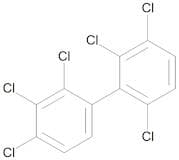
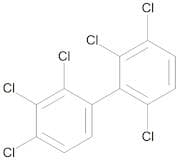
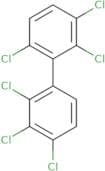
PCB 132, or 2,2',4,4'-tetrachlorobiphenyl, is a member of the polychlorinated biphenyl (PCB) family, which consists of organic compounds with two linked phenyl rings and varying degrees of chlorination. Characterized by its four chlorine atoms, PCB 132 exhibits hydrophobic properties, making it insoluble in water but soluble in organic solvents. This compound is known for its thermal stability and resistance to degradation, which historically made it useful in electrical equipment, heat exchangers, and other industrial applications. However, due to its environmental persistence and potential toxicity, PCB 132 is classified as a persistent organic pollutant (POP). It can bioaccumulate in the food chain, leading to adverse effects on wildlife and human health, including endocrine disruption and carcinogenicity. Regulatory measures have been implemented globally to limit the production and use of PCBs, including PCB 132, due to their environmental and health risks. Proper handling and disposal are essential to mitigate their impact on ecosystems and human health.
Formula:C12H4Cl6
InChI:InChI=1S/C12H4Cl6/c13-6-3-4-7(14)11(17)9(6)5-1-2-8(15)12(18)10(5)16/h1-4H
InChI key:InChIKey=OKBJVIVEFXPEOU-UHFFFAOYSA-N
SMILES:ClC1=C(C(Cl)=CC=C1Cl)C2=C(Cl)C(Cl)=C(Cl)C=C2
Synonyms:- (±)-Pcb 132
- 1,1'-Biphenyl, 2,2',3,3',4,6'-Hexachloro-
- 1,1′-Biphenyl, 2,2′,3,3′,4,6′-hexachloro-
- 2,2',3,3',4,6'-Pcb
- 2,2′,3,3′,4,6′-Hexachloro-1,1′-biphenyl
- 2,2′,3,3′,4,6′-Hexachlorobiphenyl
- 2,3,4,2′,3′,6′-Hexachlorobiphenyl
- 2,3,6,2′,3′,4′-Hexachlorobiphenyl
- 38380-05-1
- Cb 132
Sort by
Purity (%)
0
100
|
0
|
50
|
90
|
95
|
100
Found 3 products.
PCB No. 132 10 µg/mL in Isooctane
CAS:Controlled ProductFormula:C12H4Cl6Color and Shape:Single SolutionMolecular weight:360.882,2',3,3',4,6'-Hexacb
CAS:Controlled ProductHexacor is a lipophilic, reactive chemical that can cause health effects in humans and animals. It has been shown to cause neurotoxicity and developmental toxicity in humans and animals. Hexacor can also affect the acrosome reaction in spermatozoa, which is necessary for fertilization. The chemical is thought to be metabolized by the liver cells into methyl sulfone and other metabolites that are reactive with cellular proteins, leading to cell death. Hexacor has been shown to have a significant effect on human liver cells when incubated with it, causing lipid peroxidation.Formula:C12H4Cl6Purity:Min. 95%Molecular weight:360.9 g/mol