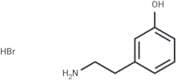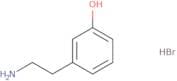
CAS 38449-59-1
:Phenol, 3-(2-aminoethyl)-, hydrobromide
Description:
Phenol, 3-(2-aminoethyl)-, hydrobromide, also known as 3-(2-aminoethyl)phenol hydrobromide, is a chemical compound characterized by its phenolic structure with an aminoethyl side chain. This compound typically appears as a white to off-white crystalline solid. It is soluble in water and polar organic solvents, which is indicative of its hydrophilic nature due to the presence of both the hydroxyl (-OH) group from the phenol and the amino (-NH2) group from the aminoethyl moiety. The hydrobromide salt form suggests that it is a protonated species, enhancing its solubility and stability in aqueous solutions. This compound may exhibit biological activity, making it of interest in pharmaceutical and biochemical research. Its properties, such as melting point, boiling point, and reactivity, can vary based on the specific conditions and purity of the sample. As with many phenolic compounds, it may also participate in various chemical reactions, including electrophilic substitutions and hydrogen bonding interactions. Safety precautions should be observed when handling this compound due to potential toxicity associated with phenolic derivatives.
Formula:C8H11NO・BrH
Sort by
Purity (%)
0
100
|
0
|
50
|
90
|
95
|
100
Found 2 products.
m-Tyramine hydrobromide
CAS:m-Tyramine hydrobromide (3-(2-aminoethyl)phenol hydrobromide) is a dopamine derivative that acts by releasing newly synthesized catecholamines or 5-HT.Formula:C8H12BrNOPurity:98.49%Color and Shape:SolidMolecular weight:218.093-Hydroxyphenethylamine hydrobromide
CAS:3-Hydroxyphenethylamine hydrobromide is a synthetic compound that binds to the adenosine A1 receptor. 3-Hydroxyphenethylamine hydrobromide is used to study the interaction of adenosine A1 receptors with other compounds and its role in neuropathic pain. This drug has been shown to inhibit the contractions of guinea-pig trachea, which may be due to its ability to act as a fluorescent probe. Compounds that are able to bind to this receptor will have affinity constants (Ki) in the micromolar range. The interactions between 3-hydroxyphenethylamine hydrobromide and other compounds can also be studied using fluorescence probes, which allow for advances in research involving amines and their conjugates.Formula:C8H11NO•HBrPurity:Min. 95%Color and Shape:White to off-white solid.Molecular weight:218.09 g/mol