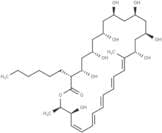
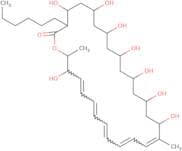
CAS 38620-77-8
:Filipin II
Description:
Filipin II is a polyene macrolide antibiotic that is primarily derived from the fermentation of the bacterium Streptomyces filipinensis. It is known for its antifungal properties, particularly against various species of fungi, including those that cause infections in humans. The compound exhibits a complex structure characterized by a long conjugated system of double bonds, which contributes to its biological activity. Filipin II interacts with sterols, particularly cholesterol, in cell membranes, leading to increased membrane permeability and ultimately cell death in susceptible organisms. This mechanism of action makes it a valuable tool in studying membrane dynamics and the role of sterols in cellular processes. In addition to its antifungal applications, Filipin II is also utilized in research to investigate lipid interactions and membrane structure. Its chemical properties include solubility in organic solvents and limited solubility in water, which is typical for many polyene compounds. Overall, Filipin II serves as an important compound in both clinical and research settings due to its unique properties and mechanisms of action.
Formula:C35H58O10
Synonyms:- Filipin II
- Filipin Ⅱ
- (3R,4S,6S,8S,10R,12R,14R,16S,17E,19E,21E,23E,25E,27S,28R)-4,6,8,10,12,14,16,27-Octahydroxy-3-hexyl-17,28-dimethyloxacyclooctacosa-17,19,21,23,25-pentaene-2-one
Sort by
Purity (%)
0
100
|
0
|
50
|
90
|
95
|
100
Found 2 products.
Filipin II
CAS:Filipin II, a polyene antibiotic with broad antifungal effects (MICs 1-10 μg/ml), inhibits ADP-respiration and causes hemolysis (IC50 0.5 μg/ml).Formula:C35H58O10Color and Shape:SolidMolecular weight:638.839Filipin II
CAS:Filipin II is a polyene macrolide antibiotic, which is a secondary metabolite produced by the filamentous bacterium *Streptomyces filipinensis*. This compound functions by intercalating into cell membranes due to its high affinity for sterols, particularly ergosterol and cholesterol. The interaction with sterols disrupts the typical organization and integrity of the lipid bilayer, altering membrane permeability and leading to cell death in sensitive organisms.
Formula:C35H58O10Purity:Min. 95%Molecular weight:638.8 g/mol