CAS 38668-01-8
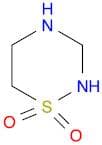
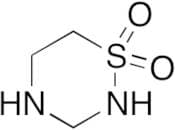
:1,2,4-thiadiazinane 1,1-dioxide
- 2H-1,2,4-thiadiazine, tetrahydro-, 1,1-dioxide
- 38668-01-8
- Taurultam
- 1,2,4-Thiadiazinane 1,1-dioxide
- Tetrahydro-2H-1,2,4-thiadiazine 1,1-dioxide
- 4-hydroxy-4-methyloxane-2,6-dione
- 5Mg, 10Mg
1,2,4-thiadiazinane-1,1-dione
CAS:Formula:C3H8N2O2SPurity:95%Color and Shape:SolidMolecular weight:136.1728Taurultam-d2 HCl
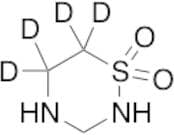
CAS:Formula:C3H6D2N2O2S·HClColor and Shape:White To Off-White SolidMolecular weight:138.18 36.46Taurultam-13C-d2 HCl
CAS:Formula:C213CH6D2N2O2S·HClColor and Shape:White To Off-White SolidMolecular weight:139.17 36.46Taurultam HCl
CAS:Formula:C3H8N2O2S·HClColor and Shape:White To Off-White SolidMolecular weight:136.17 36.46Taurultam
CAS:Controlled ProductApplications Taurultam is a compound that inhibits cell proliferation and cell adhesion in angiogenesis. Taurultam exhibits bacteriocidal effects on Escherichia coli and is also a degradation product of Taurolidine (T009050).
References Jones, D., et al.: Lett. Appl. Micro., 14, 5 (1992); Kirsch, L. & Sinn, Y.: Pharm. Dev. Tech., 2, 345 (1997); Mšhler, T., et al.: Cancer Therapy, 6, 623 (2008)Formula:C3H8N2O2SColor and Shape:White To Off-WhiteMolecular weight:136.17Taurultam
CAS:Taurultam is a taurolidine analog that has anti-angiogenic effects. The drug has been shown to inhibit tumor cell viability and induce apoptosis in cancer cells. Taurultam also inhibits the growth of bacteria by binding to the cytochrome b of mitochondrial respiratory chain, preventing electron transport and oxidative phosphorylation. Taurultam is used as a broad-spectrum antimicrobial agent, which is effective against Gram-positive and Gram-negative bacteria, including those with resistance to other antibiotics. It also has anti-inflammatory properties and inhibits inflammatory bowel disease in rats. Taurultam may be useful for treating bone cancer or fetal bovine serum because it does not affect normal cells.
Formula:C3H8N2O2SPurity:Min. 95%Molecular weight:136.17 g/mol