CAS 38689-30-4
:D-leu-D-leu
Description:
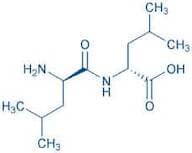
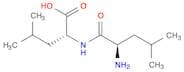
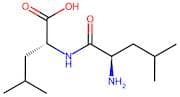
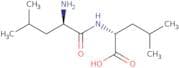
D-leu-D-leu, also known as D-leucine, is a synthetic dipeptide composed of two D-leucine amino acid residues. It is characterized by its structure, which includes a hydrophobic side chain typical of leucine, contributing to its potential interactions in biological systems. This compound is often studied for its role in various biochemical processes, including its effects on protein synthesis and cellular signaling pathways. D-leu-D-leu is not naturally occurring in proteins, as most biological systems utilize L-amino acids; however, its synthetic nature allows for exploration in research, particularly in the fields of pharmacology and biochemistry. The compound may exhibit unique properties compared to its L-counterpart, including differences in solubility and biological activity. Its CAS number, 38689-30-4, is a unique identifier that facilitates its identification in chemical databases and literature. Overall, D-leu-D-leu serves as a valuable tool for understanding the implications of amino acid stereochemistry in biological systems.
Formula:C12H24N2O3
Synonyms:- H-D-Leu-D-Leu-OH
- D-Leucyl-D-leucine
Sort by
Purity (%)
0
100
|
0
|
50
|
90
|
95
|
100
Found 5 products.
H-D-Leu-D-Leu-OH
CAS:Good substrate for D-peptidase S.Formula:C12H24N2O3Color and Shape:WhiteMolecular weight:244.33(R)-2-((R)-2-Amino-4-methylpentanamido)-4-methylpentanoic acid
CAS:(R)-2-((R)-2-Amino-4-methylpentanamido)-4-methylpentanoic acidPurity:97%Molecular weight:244.33g/molH-D-Leu-D-Leu-OH
CAS:H-D-Leu-D-Leu-OH is a type of molecule that can be found in the human body. It is an amino acid with specificities and transport mechanisms that are not yet well understood. This compound is resistant to aminopeptidase activity and has been shown to have a ph optimum in the intestinal tract. Acetylation of this molecule may also have an effect on its transport rate, as it has been shown to affect the transport rate of D-tryptophan and D-alanine. H-D-Leu-D-Leu-OH is a type of molecule that can be found in the human body. It is an amino acid with specificities and transport mechanisms that are not yet well understood. This compound is resistant to aminopeptidase activity and has been shown to have a ph optimum in the intestinal tract. Acetylation of this molecule may also have an effect on its transport rate, asFormula:C12H24N2O3Purity:Min. 95%Molecular weight:244.33 g/mol