CAS 387-46-2
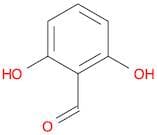
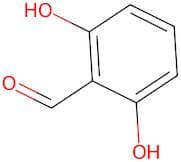
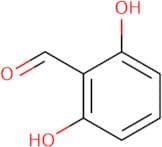
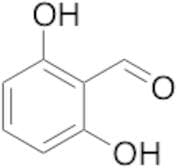
:2,6-Dihydroxybenzaldehyde
- 2,6-dihydroxy-Benzaldehyde
- 6-Hydroxysalicylaldehyde
- Benzaldehyde, 2,6-Dihydroxy-
- Ranjal
- γ-Resorcylaldehyde
- 2,6-Dihydroxybenzaldehyde
2,6-Dihydroxybenzaldehyde
CAS:2,6-Dihydroxybenzaldehyde is a chemical compound that has been used as an intermediate in the synthesis of other chemicals. It is also used as a precursor for benzaldehyde and benzoic acid. 2,6-Dihydroxybenzaldehyde can be synthesized by reacting sodium carbonate with pluronic F127 in the presence of cationic surfactant. The surface methodology used in this process involves the use of hydrophobic molecules to form micelles and liposomes on the surface of the electrode. The interaction between these micelles and liposomes is pH dependent. This reaction causes an increase in hydrogen ions, which leads to an increase in conductivity at acidic pH values. Electrochemical impedance spectroscopy (EIS) results show that 2,6-dihydroxybenzaldehyde reacts with high concentrations of salt and water vapor. FTIR spectroscopy shows that it has two hydroxyl groups and one double
Formula:C7H6O3Purity:Min. 95%Color and Shape:PowderMolecular weight:138.12 g/mol2,6-Dihydroxybenzaldehyde
CAS:Controlled ProductApplications 2,6-Dihydroxybenzaldehyde is a reactant used in the synthesis of cinnamides as potent cholinesterase inhibitors.
References Saeed, A., et. al.: Eur. J. Med. Chem., 78, 43 (2014)Formula:C7H6O3Color and Shape:NeatMolecular weight:138.12