CAS 38873-82-4
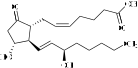
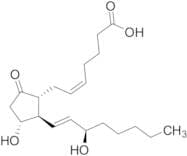
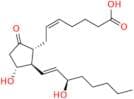
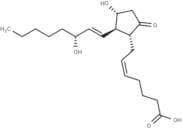
:Prosta-5,13-dien-1-oicacid, 11,15-dihydroxy-9-oxo-, (5Z,11a,13E,15R)- (9CI)
Description:
Prosta-5,13-dien-1-oic acid, 11,15-dihydroxy-9-oxo-, (5Z,11a,13E,15R)-, commonly referred to by its CAS number 38873-82-4, is a synthetic compound that belongs to the class of prostaglandins, which are lipid compounds derived from fatty acids. This substance exhibits a complex structure characterized by multiple functional groups, including hydroxyl (-OH) groups and a ketone (C=O) group, contributing to its biological activity. Prostaglandins are known for their role in various physiological processes, including inflammation, blood flow regulation, and the modulation of immune responses. The specific stereochemistry indicated by the (5Z,11a,13E,15R) notation suggests a particular three-dimensional arrangement of atoms, which is crucial for its interaction with biological receptors. As a chemical entity, it may be utilized in research settings to study its effects on biological systems or to develop therapeutic agents targeting prostaglandin pathways. Its stability, solubility, and reactivity would depend on the surrounding conditions and the presence of other chemical species.
Formula:C20H32O5
Synonyms:- (15R)-Prostaglandin E2
- 15-Epiprostaglandin E2
- 15b-PGE2
- 15-epi-Prostaglandin E2
- (15R)-PGE2
- Dinoprostone EP Impurity A
- 15(R)-PROSTAGLANDIN E2
- XEYBRNLFEZDVAW-GKEZHNTDSA-N
- (Z)-7-[(1R,2R,3R)-3-hydroxy-2-[(E)-(3R)-3-hydroxyoct-1-enyl]-5-oxocyclopentyl]hept-5-enoic acid (15-epiPGE2
- 9-OXO-11ALPHA,15R-DIHYDROXY-PROSTA-5Z,13E-DIEN-1-OIC ACID
- 15-EPI PGE2
Sort by
The purity filter is not visible because current products do not have associated purity data for filtering.
Found 4 products.
15(R)-Prostaglandin E2
CAS:Controlled ProductFormula:C20H32O5Color and Shape:NeatMolecular weight:352.46515(R)-Prostaglandin E2
CAS:15(R)-Prostaglandin E2, the C-15 epimer of the more physiologically abundant 15(S)-PGE2 (sc-201225) isomer, is produced mainly from arachidonic acid (sc-200770) via the action of COX and PGES enzymes. Present in nearly all cell types, PGE2 interacts with four distinct receptors, EP1 to EP4, leading to a wide range of biological effects. However, 15(R)-Prostaglandin E2 exhibits significantly lower efficacy in most biological assays compared to its 15(S) counterpart. Notably, acid catalyzed epimerization can transform 15(R)-Prostaglandin E2 into the more active 15(S)-Prostaglandin E2 form.Formula:C20H32O5Color and Shape:SolidMolecular weight:352.471