CAS 38940-61-3
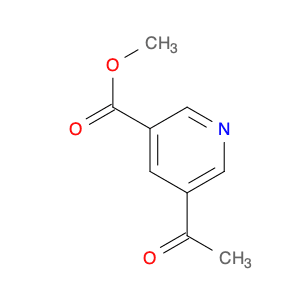
:3-Pyridinecarboxylic acid, 5-acetyl-, methyl ester
Description:
3-Pyridinecarboxylic acid, 5-acetyl-, methyl ester, also known as methyl 5-acetyl-3-pyridinecarboxylate, is an organic compound characterized by its pyridine ring structure, which is a six-membered aromatic ring containing one nitrogen atom. This compound features a carboxylic acid functional group and an acetyl group, contributing to its reactivity and potential applications in organic synthesis. As a methyl ester, it exhibits properties typical of esters, such as volatility and solubility in organic solvents. The presence of the acetyl group enhances its reactivity, making it useful in various chemical reactions, including acylation and esterification. This compound may be utilized in the synthesis of pharmaceuticals, agrochemicals, and other fine chemicals due to its functional groups that can participate in further chemical transformations. Additionally, its structural characteristics may influence its biological activity, making it a subject of interest in medicinal chemistry. Overall, 3-Pyridinecarboxylic acid, 5-acetyl-, methyl ester is a versatile compound with significant potential in chemical research and applications.
Formula:C9H9NO3
Synonyms:- 5-Acetylnicotinic acid methyl ester
Sort by
Purity (%)
0
100
|
0
|
50
|
90
|
95
|
100
Found 4 products.
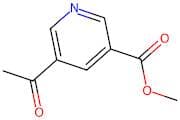
3-Pyridinecarboxylic acid, 5-acetyl-, methyl ester
CAS:Formula:C9H9NO3Purity:98%Color and Shape:SolidMolecular weight:179.1727Methyl 5-acetylnicotinate
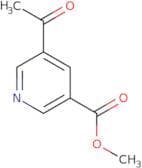
CAS:Methyl 5-acetylnicotinate is an organic compound that contains a hydroxy group and an axial group. It can be synthesized by reacting acetyl chloride with nicotinic acid in the presence of a base. Methyl 5-acetylnicotinate is an intermediate in the synthesis of several natural compounds, including eglandulosa, pyridine, and pentacyclic alkaloids. This compound can be converted to 2-methyl nicotinic acid through epimerization.
Formula:C9H9NO3Purity:Min. 95%Molecular weight:179.17 g/mol