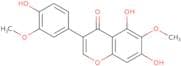
CAS 39012-01-6
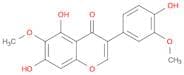
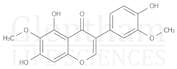
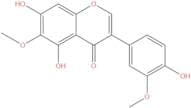
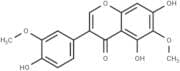
:5,7-dihydroxy-3-(4-hydroxy-3-methoxyphenyl)-6-methoxy-4H-chromen-4-one
- 4H-1-Benzopyran-4-one, 5,7-dihydroxy-3-(4-hydroxy-3-methoxyphenyl)-6-methoxy-
- 5,7-Dihydroxy-3-(4-hydroxy-3-methoxyphenyl)-6-methoxy-4H-1-benzopyran-4-one
Iristectorigenin A
CAS:Iristectorigenin A is a natural isoflavone isolated from B. chinensis rhizomes with antioxidant activity.Formula:C17H14O7Purity:99.9% - 99.97%Color and Shape:SolidMolecular weight:330.29Ref: TM-TN2357
1mg63.00€5mg137.00€1mL*10mM (DMSO)145.00€10mg205.00€25mg350.00€50mg515.00€100mg732.00€Iristectorigenin A
CAS:Iristectorigenin A is a naturally occurring isoflavone compound, which is derived from the rhizomes of the Iris plant species, particularly Iris tectorum. As a bioactive flavonoid, it exhibits multiple pharmacological activities owing to its chemical structure. The compound operates primarily by modulating various biochemical pathways, including antioxidant, anti-inflammatory, and potential anti-cancer pathways. This modulation is facilitated by its ability to interact with cellular signaling molecules and enzyme systems, such as cyclooxygenase and lipoxygenase, which are involved in inflammatory processes. Additionally, it has shown potential in inhibiting certain tumor cell lines, suggesting its role in the regulation of cell growth and apoptosis.
Formula:C17H14O7Purity:Min. 95%Color and Shape:PowderMolecular weight:330.29 g/mol