CAS 39088-65-8
:4-(Mercaptomethyl)benzoic acid
Description:
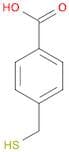
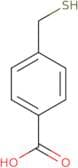
4-(Mercaptomethyl)benzoic acid, with the CAS number 39088-65-8, is an organic compound characterized by the presence of both a carboxylic acid group and a thiol group. This compound features a benzoic acid backbone, where a mercaptomethyl group (-CH2SH) is attached to the para position of the aromatic ring. The presence of the thiol group imparts unique properties, such as the ability to form disulfide bonds and participate in redox reactions, making it useful in various chemical applications. The carboxylic acid functionality contributes to its acidity and solubility in polar solvents. Additionally, 4-(Mercaptomethyl)benzoic acid can serve as a building block in organic synthesis, particularly in the development of pharmaceuticals and materials science. Its reactivity and functional groups allow for further derivatization, enhancing its utility in chemical research and industrial applications. Safety considerations should be taken into account due to the potential reactivity of the thiol group, which can lead to the formation of unpleasant odors and may be sensitive to oxidation.
Formula:C8H8O2S
InChI:InChI=1S/C8H8O2S/c9-8(10)7-3-1-6(5-11)2-4-7/h1-4,11H,5H2,(H,9,10)
InChI key:InChIKey=KCTZYAAHUYSVON-UHFFFAOYSA-N
SMILES:C(O)(=O)C1=CC=C(CS)C=C1
Synonyms:- 4-(Mercaptomethyl)benzoic acid
- 4-Mercaptomethylbenzoic acid
- p-Toluic acid, α-mercapto-
- Benzoic acid, 4-(mercaptomethyl)-
- 4-(sulfanylmethyl)benzoic acid
- 4-(sulfanylmethyl)benzoate
Sort by
Purity (%)
0
100
|
0
|
50
|
90
|
95
|
100
Found 2 products.
4-(sulfanylmethyl)benzoic acid
CAS:Formula:C8H8O2SPurity:95%Color and Shape:SolidMolecular weight:168.21294-(Mercaptomethyl)benzoic acid
CAS:4-(Mercaptomethyl)benzoic acid is a thiosemicarbazide derivative that has been used as a photosensitizer in photodynamic therapy. This compound has the ability to bind to selenide ions, which are electron acceptors, and is converted to its reactive form by light. 4-(Mercaptomethyl)benzoic acid may be used for the treatment of cancers that have been resistant to other treatments. The compound also shows potential for use in diagnosing or treating other conditions such as carboxylate ligand transfer reactions and cadmium toxicity. The diameter of this drug is around 2 nm.Formula:C8H8O2SPurity:Min. 95%Molecular weight:168.21 g/mol