CAS 39129-54-9
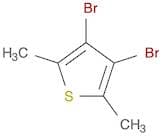
:Thiophene,3,4-dibromo-2,5-dimethyl-
Description:
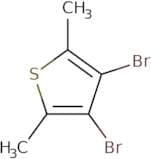
Thiophene, 3,4-dibromo-2,5-dimethyl- is a substituted thiophene compound characterized by its five-membered aromatic ring containing sulfur. The presence of two bromine atoms at the 3 and 4 positions, along with two methyl groups at the 2 and 5 positions, contributes to its unique chemical properties. This compound is typically a colorless to pale yellow liquid or solid, depending on its state at room temperature. It exhibits a relatively low solubility in water but is soluble in organic solvents, which is common for thiophene derivatives. The bromine substituents enhance its reactivity, making it useful in various chemical reactions, including electrophilic substitution and cross-coupling reactions. Additionally, the methyl groups can influence the electronic properties of the molecule, affecting its stability and reactivity. Thiophene derivatives are often studied for their applications in organic electronics, pharmaceuticals, and as intermediates in organic synthesis. Safety precautions should be taken when handling this compound due to the presence of bromine, which can be hazardous.
Formula:C6H6Br2S
Synonyms:- 2,5-Dimethyl-3,4-dibromothiophene
- 3,4-Dibromo-2,5-dimethylthiophene
Sort by
Purity (%)
0
100
|
0
|
50
|
90
|
95
|
100
Found 4 products.
2,4-Dibromo-3,5-dimethylthiophene
CAS:Formula:C6H6Br2SPurity:97%Color and Shape:SolidMolecular weight:269.98483,4-Dibromo-2,5-dimethylthiophene
CAS:Controlled ProductFormula:C6H6Br2SColor and Shape:NeatMolecular weight:269.9853,4-dibromo-2,5-dimethylthiophene
CAS:3,4-Dibromo-2,5-dimethylthiophene is a diphosphinoethane that has been used as a catalyst for the thermal and photochemical activation of methyl groups. It has been shown to have a high reactivity with hexane and form fluorescent polymer films. 3,4-Dibromo-2,5-dimethylthiophene is structurally similar to other diphosphinoethanes that are used in phosphine devices and polymer films. The crystal structure of 3,4-dibromo-2,5-dimethylthiophene has been determined using X-ray crystallography. In this study it was found that the molecule can exist in two different structural isomers.
Formula:C6H6Br2SPurity:Min. 95%Molecular weight:270 g/mol