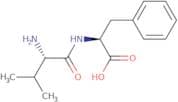
CAS 3918-92-1
:val-phe
Description:
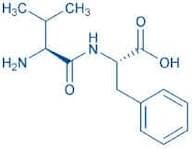
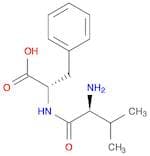
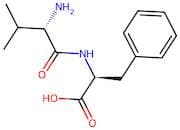
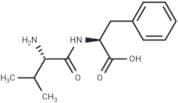
Val-Phe, or Valine-Phenylalanine, is a dipeptide composed of the amino acids valine and phenylalanine linked by a peptide bond. It is classified as a non-polar, hydrophobic compound due to the presence of the aliphatic side chain of valine and the aromatic side chain of phenylalanine. This dipeptide is often studied in the context of protein synthesis and structure, as well as in various biochemical applications. Val-Phe can influence protein folding and stability, and it may play a role in signaling pathways within biological systems. Its CAS number, 3918-92-1, is a unique identifier that allows for easy reference in chemical databases. Val-Phe is soluble in water and can be used in various research applications, including studies on peptide synthesis and the development of peptide-based therapeutics. As with many peptides, its properties can be affected by factors such as pH and temperature, which can influence its conformation and interactions with other biomolecules.
Formula:C14H20N2O3
InChI:InChI=1/C14H20N2O3/c1-9(2)12(15)13(17)16-11(14(18)19)8-10-6-4-3-5-7-10/h3-7,9,11-12H,8,15H2,1-2H3,(H,16,17)(H,18,19)/t11-,12-/m0/s1
SMILES:CC(C)[C@@H](C(=N[C@@H](Cc1ccccc1)C(=O)O)O)N
Synonyms:- H-Val-Phe-OH
- L-Valyl-L-phenylalanine
- (2S)-2-{[(2S)-2-ammonio-3-methylbutanoyl]amino}-3-phenylpropanoate
Sort by
Purity (%)
0
100
|
0
|
50
|
90
|
95
|
100
Found 6 products.
H-Val-Phe-OH
CAS:Val-Phe inhibited angiotensin-1 converting enzyme (ACE), IC₅₀ 9.2 μM. Contrary to the dipeptide Ile-Phe (G-2420) containing merely an additional methyl group, Val-Phe does not self-assemble.Formula:C14H20N2O3Purity:> 99%Color and Shape:White PowderMolecular weight:264.32L-Valyl-L-phenylalanine
CAS:L-Valyl-L-phenylalanine has been reported as biocompatible polymer.Formula:C14H20N2O3Color and Shape:SolidMolecular weight:264.32H-Val-Phe-OH
CAS:H-Val-Phe-OH is a peptide consisting of three amino acids, Valine, Phenylalanine and Hydroxyproline. It is a small molecule that has been shown to have an antihypertensive effect in rats. H-Val-Phe-OH binds to the dihydropyridine receptor on the cell membrane surface, which causes blood vessels to relax and contract. This action leads to decreased blood pressure. The high reactivity of H-Val-Phe-OH with other molecules makes it biodegradable, which means it can be broken down by water or enzymes into smaller molecules that are less harmful to the environment.
Formula:C14H20N2O3Purity:Min. 95%Molecular weight:264.32 g/mol