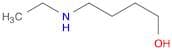
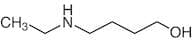
CAS 39216-86-9
:Ethylaminobutanol; 95%
Description:
Ethylaminobutanol, with the CAS number 39216-86-9, is an organic compound characterized by its amine and alcohol functional groups. It typically appears as a colorless to pale yellow liquid with a distinctive amine odor. This compound is soluble in water and organic solvents, making it versatile for various applications. Ethylaminobutanol is primarily used in the synthesis of pharmaceuticals, agrochemicals, and as a building block in organic chemistry. Its structure allows it to participate in various chemical reactions, including nucleophilic substitutions and condensation reactions. The presence of both an amino group and a hydroxyl group contributes to its reactivity and potential as a surfactant or emulsifying agent. Safety considerations include handling it in well-ventilated areas and using appropriate personal protective equipment, as it may cause irritation to the skin and eyes. Overall, ethylaminobutanol is a valuable compound in chemical synthesis and industrial applications due to its unique properties.
Formula:C6H15NO
InChI:InChI=1/C6H15NO/c1-2-7-5-3-4-6-8/h7-8H,2-6H2,1H3
SMILES:CCNCCCCO
Synonyms:- 4-Ethylamino-1-butanol
- 4-(Ethylamino)Butan-1-Ol
Sort by
Purity (%)
0
100
|
0
|
50
|
90
|
95
|
100
Found 5 products.
4-Ethylamino-1-butanol
CAS:Formula:C6H15NOPurity:>98.0%(T)Color and Shape:Colorless to Light yellow clear liquidMolecular weight:117.194-Ethylamino-1-butanol
CAS:Formula:C6H15NOPurity:98%Color and Shape:Liquid, ClearMolecular weight:117.1924-Ethylamino-1-butanol
CAS:<p>4-Ethylamino-1-butanol is an alkanolamine that interacts with receptors in the body. It has a hydroxyl group and is a molecule that contains functionalities. It interacts with other molecules, such as corticotropin-releasing hormone (CRH). 4-Ethylamino-1-butanol binds to CRH and prevents it from binding to its receptor, which decreases the release of corticotropin. This compound has been used as a positron emission tomography (PET) radiotracer for imaging the insulin receptor in living tissue. The chemical can be systematically introduced into tissues and organs, including the brain, where it accumulates due to its hydrophilic nature. 4-Ethylamino-1-butanol also has oxygenated groups that are suitable for PET imaging using 18F radiolabeling.</p>Formula:C6H15NOPurity:Min. 95%Molecular weight:117.19 g/mol