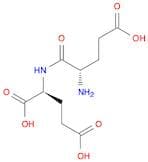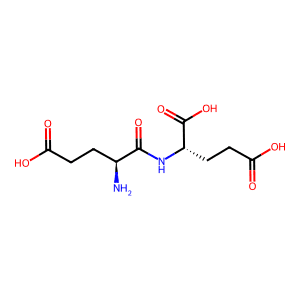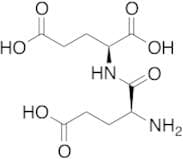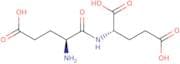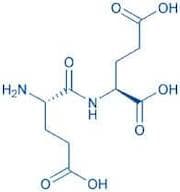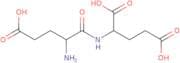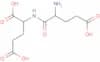
CAS 3929-61-1
:L-Glutamyl-L-glutamic acid
- 107: PN: US20070066537 PAGE: 17 claimed protein
- 14: PN: WO2020009548 SEQID: 14 claimed protein
- 2: PN: WO2008083678 PAGE: 33 claimed protein
- 84: PN: EP2161028 PAGE: 10 claimed protein
- 90: PN: WO2004025259 PAGE: 57 claimed protein
- <span class="text-smallcaps">L</smallcap>-Glutamic acid, <smallcap>L</span>-α-glutamyl-
- <span class="text-smallcaps">L</smallcap>-Glutamic acid, N-<smallcap>L</span>-α-glutamyl-
- <span class="text-smallcaps">L</smallcap>-Glutamyl-<smallcap>L</span>-glutamic acid
- <span class="text-smallcaps">L</smallcap>-α-Glutamyl-<smallcap>L</span>-glutamic acid
- Alpha-Glutamylglutamic Acid
- Glutamic acid, N-<span class="text-smallcaps">L</smallcap>-α-glutamyl-, <smallcap>L</span>-
- H-Glu-Glu-OH
- L-alpha-glutamyl-L-glutamic acid
- NSC 335983
- α-Glutamylglutamic acid
- L-α-Glutamyl-L-glutamic acid
- L-Glutamyl-L-glutamic acid
- L-Glutamic acid, L-α-glutamyl-
- L-Glutamic acid, N-L-α-glutamyl-
- See more synonyms
L-GLUTAMIC ACID, L-A-GLUTAMYL-
CAS:Formula:C10H16N2O7Purity:98%Color and Shape:SolidMolecular weight:276.2432Glutamyl-glutamic acid
CAS:Glutamyl-glutamic acid (Glu-glu) is an Interpeptide Bridge in the Murein of Some Micrococci and Arthrobacter sp..Formula:C10H16N2O7Purity:≥98%Color and Shape:SolidMolecular weight:276.24N-L-α-Glutamyl-L-glutamic Acid
CAS:Controlled ProductFormula:C10H16N2O7Color and Shape:NeatMolecular weight:276.24H-Glu-Glu-OH
CAS:H-Glu-Glu-OH is an organic acid that has proteolytic and gene product properties. It is a hyperactive compound that can be used as a sample preparation reagent for the detection of glutamic acid in proteins. H-Glu-Glu-OH inhibits protein synthesis by binding to ribosomes, which are responsible for the production of proteins in the cell, and prevents their function. Magnetic resonance spectroscopy has been used to investigate the uptake of H-Glu-Glu-OH into mammalian cells and ovarian follicles.
Formula:C10H16N2O7Purity:Min. 95 Area-%Color and Shape:White PowderMolecular weight:276.24 g/molH-Glu-Glu-OH
CAS:Dipeptides as aspartylaspartate and glutamylglutamate can be utilized as growth substrates for the oral bacteria Porphyromonas gingivalis, Prevotella intermedia, Prevotella nigrescens and Fusobacterium nucleatum.Formula:C10H16N2O7Purity:> 98%Color and Shape:WhiteMolecular weight:276.25Glu-Glu
CAS:Glu-Glu is a mouse monoclonal antibody (IgG2a) that inhibits the activity of human leukocyte elastase. Glu-Glu has been shown to inhibit the production of inflammatory cytokines, such as IL-8 and TNF-α, in human serum obtained from patients with chronic cough. It also blocks the formation of disulfide bonds in peptides and proteins, which are important for their function. Glu-Glu has been used to study pathogenic mechanisms of chronic obstructive pulmonary disease and metabolic disorders, as well as its effects on polymerase chain reactions and enzyme activities in vitro.
Formula:C9H14N4O3Purity:Min. 95%Molecular weight:226.23 g/mol