CAS 39319-11-4
:Phosphine, (4-ethenylphenyl)diphenyl-, polymer with diethenylbenzene and ethenylbenzene
Description:
The chemical substance known as "Phosphine, (4-ethenylphenyl)diphenyl-, polymer with diethenylbenzene and ethenylbenzene," with CAS number 39319-11-4, is a type of polymer that incorporates phosphine functionalities within its structure. This polymer is characterized by its complex arrangement of phenyl groups and ethenyl (vinyl) substituents, which contribute to its unique physical and chemical properties. Typically, such polymers exhibit good thermal stability and can possess varying degrees of rigidity and flexibility depending on the specific arrangement of the monomer units. The presence of phosphine groups may impart specific reactivity, making the polymer useful in applications such as catalysis or as a ligand in coordination chemistry. Additionally, the polymer's structure can influence its solubility, mechanical strength, and optical properties, making it suitable for various industrial applications, including coatings, adhesives, and electronic materials. However, detailed safety and handling information should be consulted due to the potential hazards associated with phosphine derivatives.
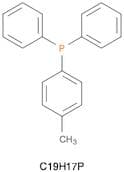
Formula:(C20H17P·C10H10·C8H8)x
Synonyms:- Benzene, diethenyl-, polymer with ethenylbenzene and (4-ethenylphenyl)diphenylphosphine
- (4-Ethenylphenyl)diphenylphosphine-diethenylbenzene-ethenylbenzene copolymer
- Phosphine, (4-ethenylphenyl)diphenyl-, polymer with diethenylbenzene and ethenylbenzene
- Benzene, ethenyl-, polymer with diethenylbenzene and (4-ethenylphenyl)diphenylphosphine
- Diphenyl(4-vinylphenyl)phosphine-divinylbenzene-styrene copolymer
- TRIPHENYLPHOSPHINE POLYSTYRENE
- MACROPOROUS POLYMER SUPPORTED TRIPHENYLPHOSPHINE
- Triphenylphosphine, polymer supported1.4-2.0mmol/g on polystyrene 200-400 mesh2% DVB loading
- Triphenylphosphine, polymer-supported, 1.4 to 2.0mmol/g on polystyrene
- Triphenylphosphine, polymer-bound 100-200 mesh, extent of labeling: ~1.6 mmol/g loading
- PL-TPP MP-RESIN
- 4-Diphenylphosphino polystyrene resin, cross-linked with 2% DVB
- TriphenylphosphineResin1%DvbMesh,1-1.5Mmol/G
- TRIPHENYLPHOSPHINE POL. BOUND, 200-400 M ESH, ~3 MMOL/G
- POLYMER-BOUND TRIPHENYLPHOSPHINE
- -C6H4P(C6H5)2
- Triphenylphosphine resin, 1% crosslinked with DVB
- TRIPHENYLPHOSPHINE, POLYMER-SUPPORTED
- TRIPHENYLPHOSPHINE NOVAGEL
- POLYSTYRENE-PPH2
- Triphenylphosphine resin(1.0-1.5 meq/g, 100-200 mesh)
- TRIPHENYLPHOSPHINE RESIN, 1% CROSSL.WITH DVB, 1.2-1.5 MMOL/G, 200-400 MESH
- DIPHENYLPHOSPHINOBENZOYL NOVAGEL(TM) AM RESIN
- diphenylphosphinated
- Triphenylphosphine polystyrene (200-400 mesh, 1.0-1.5 mmol
- TRIPHENYLPHOSPHINE POL. BOUND, 100-200 M ESH, ~1.6 MMOL/G
- DIPHENYLPHOSPHINO-POLYSTYRENE
- POLYMER SUPPORTED TRIPHENYLPHOSPHINE
- Triphenylphosphine resin, 1% crossl. with DVB, 1.2-1.5 mmol/g, 100-200 mesh
- Triphenylphosphine, polymer-bound 100-200 mesh, extent of labeling: ~3 mmol/g triphenylphosphine loading
- 4-Diphenylphosphino Polystyrene Resin cross-linked with 2% DVB (200-400mesh) (1.0-2.0mmol/g)
- Triphenylphosphine, polyMer-bound 100-200 Mesh, extent of labeling: ~3.0 MMol/g loading, 2 % cross-linked with divinylbenzene
- TRIPHENYLPHOSPHINE POLYMER BOUND
- TRIPHENYLPHOSPHINE NOVAGEL(TM)
- PL-TPP RESIN
- COPOLYMER OF STYRENE AND DIVINYLBENZENE, DIPHENYLPHOSPHINATED
- Triphenylphosphine polystyrene (100-200 mesh, 0.8-1.6 mmol
- TRIPHENYLPHOSPHINE PS RESIN
- TRIPHENYLPHOSPHINE PS
- TRIPHENYLPHOSPHINE RESIN
- 4-DIPHENYLPHOSPHINO POLYSTYRENE RESIN
- Triphenylphosphine resin, Crosslinked with 1% DVB, 1.2-1.5 mmol/g, 100-200 mesh
- POLYSTYRENE CROSSLINKED WITH DIVINYL-BENZENE, DIPHENYLPHOSPHINATED
- Triphenylphosphine resin, 1% crosslinked with DVB, 1.0-1.5mmol/g
- 4-DIPHENYLPHOSPHINO POLYSTYRENE RESIN, CROSS-LINKED WITH 2% DVB: (1.0-2.0MMOLP/G), 200-400MESH
- See more synonyms
Sort by
Purity (%)
0
100
|
0
|
50
|
90
|
95
|
100
Found 7 products.
Triphenylphosphine, polymer bound
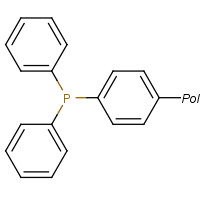
CAS:Triphenylphosphine, polymer boundPurity:100-200 mesh, extent of labeling: ~1.6 mmol/g loadColor and Shape:SolidMolecular weight:261.28g/molTriphenylphosphine, polymer bound, 1.4-2.0 mmol/g on polystyrene, 200-400 mesh, 1% cross linked with DVB
CAS:Triphenylphosphine, polymer bound, 1.4-2.0 mmol/g on polystyrene, 200-400 mesh, 1% cross linked with DVBFormula:C18H14PPolPurity:≥95%Color and Shape: cream to off white resin beads solidMolecular weight:261.27752g/molTriphenylphosphine, polymer supported 1.4-2.0mmol/g on polystyrene 200-400 mesh 1% DVB loading
CAS:Formula:C18H14PColor and Shape:SolidMolecular weight:261.284Triphenylphosphine, polymer bound, 1.4-2.0 mmol/g on polystyrene, 200-400 mesh, 2% cross linked with DVB
CAS:Triphenylphosphine, polymer bound, 1.4-2.0 mmol/g on polystyrene, 200-400 mesh, 2% cross linked with DVBPurity:≥95%Triphenylphosphine, polymer supported 1.4-2.0mmol/g on polystyrene 200-400 mesh 2% DVB loading
CAS:Controlled ProductFormula:(C20H17P·C10H10·C8H8)xColor and Shape:MixtureMolecular weight:262.29Triphenylphosphine resin
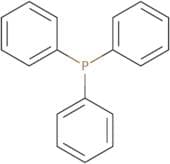
CAS:Triphenylphosphine resin is a solid catalyst that is used in organic synthesis. It is obtained by the reaction of triphenylphosphine and trifluoroacetic acid with fatty acids. Triphenylphosphine resin can be used to synthesize compounds, such as pharmaceuticals, plastics, and pesticides. This catalyst has been shown to produce light emission when it reacts with diphenyl sulfoxide in an acidic environment. The light emission indicates that the reaction proceeds via a radical chain mechanism. Triphenylphosphine resin also has transport properties and can be used to study reactions involving mitochondrial membranes with potential. In addition, this catalyst has been shown to react with hydrochloric acid and sodium carbonate to generate nuclear DNA without harming mitochondrial DNA or proteins. The structural analysis of this compound shows that it consists of biphenyl-type molecules connected through phosphorous atoms.br>br>NMR spectroscopic data for triphenylphosphine resinFormula:(C20H17P)m•(C10H10)n•(C8H8)xPurity:Min. 95%Color and Shape:Powder