CAS 39513-54-7
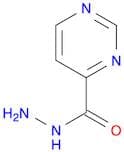
:pyrimidine-4-carbohydrazide
Description:
Pyrimidine-4-carbohydrazide is an organic compound characterized by its pyrimidine ring structure, which is a six-membered aromatic heterocycle containing two nitrogen atoms at positions 1 and 3. This compound features a hydrazide functional group, specifically at the 4-position of the pyrimidine ring, which contributes to its reactivity and potential biological activity. Pyrimidine-4-carbohydrazide is typically a white to off-white solid and is soluble in polar solvents, such as water and alcohols, due to the presence of the hydrazide group. It may exhibit various chemical properties, including the ability to form hydrogen bonds, which can influence its interactions in biological systems. This compound is of interest in medicinal chemistry and may serve as a precursor for the synthesis of more complex molecules or as a potential pharmacophore in drug development. Its CAS number, 39513-54-7, allows for easy identification in chemical databases and literature.
Formula:C5H6N4O
InChI:InChI=1/C5H6N4O/c6-9-5(10)4-1-2-7-3-8-4/h1-3H,6H2,(H,9,10)
SMILES:c1cncnc1C(=O)NN
Synonyms:- 4-Pyrimidinecarboxylic Acid, Hydrazide
- Pyrimidine-4-carboxylic acid hydrazide
- Pyrimidine-4-carbohydrazide
Sort by
Purity (%)
0
100
|
0
|
50
|
90
|
95
|
100
Found 4 products.
PYRIMIDINE-4-CARBOXYLIC ACID HYDRAZIDE
CAS:Formula:C5H6N4OPurity:98%Color and Shape:SolidMolecular weight:138.1273Pyrimidine-4-carbohydrazide
CAS:Formula:C5H6N4OPurity:98%Color and Shape:SolidMolecular weight:138.13Pyrimidine-4-carboxylic acid hydrazide
CAS:Pyrimidine-4-carboxylic acid hydrazide (PCAH) is an antimycobacterial agent that inhibits the growth of Mycobacterium tuberculosis and other related species. PCAH is a ligand that binds to redox active metal ions, forming a supramolecular complex. The carboxyl group on PCAH reacts with the hydroxide ion in the presence of water to produce hydrogen peroxide, which in turn oxidizes the mycolic acids in the cell wall of M. tuberculosis, leading to cell death. The pyridine ring on PCAH is nucleophilic and can react with nucleophiles such as thiols or amines, which are found in proteins or peptides. This reaction results in nucleophilic substitutions, which inhibit bacterial protein synthesis and lead to cell death.Formula:C5H6N4OPurity:Min. 95%Molecular weight:138.13 g/molRef: 3D-NP57376
Discontinued product