CAS 39608-47-4
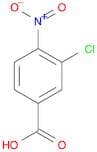
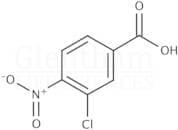
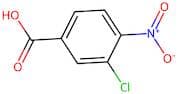
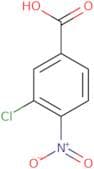
:3-Chloro-4-nitrobenzoic acid
3-Chloro-4-nitrobenzoic acid
CAS:Formula:C7H4ClNO4Purity:97%Color and Shape:SolidMolecular weight:201.56403-Chloro-4-nitrobenzoic acid
CAS:3-Chloro-4-nitrobenzoic acidFormula:C7H4ClNO4Purity:≥95%Color and Shape: pale yellow solidMolecular weight:201.56g/mol3-Chloro-4-nitrobenzoic acid
CAS:Formula:C7H4ClNO4Purity:97%Color and Shape:SolidMolecular weight:201.563-Chloro-4-nitrobenzoic acid
CAS:3-Chloro-4-nitrobenzoic acid (3CNB) is an amine that has been shown to be a 5-HT1A receptor agonist. It has been used in animal models of anxiety, depression and schizophrenia. 3CNB is able to activate the 5-HT1A receptor, which is involved in the regulation of anxiety, mood and other behaviors. The activation energies for the binding of 3CNB to the 5-HT1A receptor are calculated to be 8.3 kcal/mol and 9.2 kcal/mol at pH 7.0 and 10 respectively. A clinical study found that this agent was effective in treating trichomonas vaginalis infections as well as reducing symptoms of irritable bowel syndrome. In vivo studies have revealed that 3CNB is capable of inducing a sustained increase in extracellular serotonin levels in rat brain tissue with a half life of 2 hours. Kinetic studies have also shown that nitro groups enhance
Formula:C7H4ClNO4Purity:Min. 98 Area-%Color and Shape:PowderMolecular weight:201.56 g/molRef: 3D-FC71155
Discontinued product